Antes de Dianética: cinco hilos y un nudo

Italiano · English · Français · Deutsch · Русский · Español

En mayo de 1950 sale un libro que habla de huellas permanentes, de carga, de cadenas de episodios y de un método para reducirlos. No cita a casi nadie. Y sin embargo cada una de sus piezas tiene una historia documentada, de medio siglo, en disciplinas que no se hablaban entre sí.

Todas las citas se han leído en los textos originales. Al final: qué está demostrado y qué no.

1900191019201930194019501960escala comprimida antes de 1940El indicadorLa huellaCarga y cadenaEl procedimientola psiquiatría se va:fármacos y manualesMedicina de guerrainstrumento 1951retardo de comunicación 1953patente 1966Ziehen 1900Jung 1904–07el puente 1912Woodworth 1938Mathison 1951Semon 1904Bleuler 1916Russell 1921Breuer y Freud 1895Janet 1898Pávlov 1927Janet 1904Janet 1919Kardiner 1941Grinker y Spiegel 1945Hanson 1949películas del ejército 1944, 19461950
Cada punto es un texto leído en el original. Cuatro hilos entran en el nudo de 1950; el indicador se añade justo después. La medicina de guerra da una rama al nudo y luego toma otro camino.

El esquema se lee de izquierda a derecha. Cada color es un hilo, y lo encontrarás en los títulos de abajo.

La huella

La palabra «engrama» la acuña un zoólogo alemán, Richard Semon, en 1904. Su tesis es que todo estímulo deja en la materia viva una modificación que permanece:

«En muchísimos casos puede demostrarse que la sustancia irritable del organismo, tras la acción y el cese de un estímulo, queda modificada de forma permanente. Llamo a esta acción de los estímulos su acción engráfica, porque por así decirlo se graba o se inscribe en la sustancia orgánica. A la modificación de la sustancia orgánica así producida la llamo el engrama del estímulo en cuestión.»

«…nach Einwirkung und Wiederaufhören eines Reizes […] dauernd verändert ist. Ich bezeichne diese Wirkung der Reize als ihre engraphische Wirkung, weil sie sich in die organische Substanz sozusagen eingräbt oder einschreibt. Die so bewirkte Veränderung der organischen Substanz bezeichne ich als das Engramm des betreffenden Reizes.» — Semon, Die Mneme, 1904.

Semon añade dos cosas que cuentan. El engrama registra todo lo que estaba presente en ese momento, no solo el estímulo principal. Y basta con que vuelva un fragmento de aquella situación para que se reactive el conjunto.

En 1916 Eugen Bleuler, el psiquiatra de lengua alemana de mayor autoridad, lleva el término a su manual. Lo usa decenas de veces, como palabra corriente, y da el paso que a Semon le faltaba:

«El olvido, pues, por regla general no se debe a una desaparición de los engramas, sino a la imposibilidad de reavivarlos como recuerdos.»

«Das Vergessen beruht also in der Regel nicht auf einem Verschwinden der Engramme, sondern auf einer Unmöglichkeit, diese als Erinnerungen zu beleben.» — Bleuler, Lehrbuch der Psychiatrie, 1916.

La causa del bloqueo, escribe, está «sobre todo en obstáculos afectivos». Huella intacta, evocación impedida, y el impedimento es emocional. En 1921 Bertrand Russell expone todo esto en inglés, en un libro de amplia difusión. En 1950, por tanto, «engram» es una palabra que un lector culto de lengua inglesa podía conocer.

La carga y la cadena

En 1895 Breuer y Freud publican los Estudios sobre la histeria. La idea central: un episodio emocional cuya carga no se ha descargado sigue activo y produce síntomas en el cuerpo; si la persona lo evoca con toda su emoción, el síntoma cede. Freud describe también cómo están ligados los episodios entre sí: por semejanza, en torno a un núcleo.

«A la agrupación de reminiscencias semejantes en una multiplicidad de estratificaciones lineales, como en un legajo de documentos, la he llamado formación de un tema.»

«The grouping of similar reminiscences in a multiplicity of linear stratifications, as represented in a bundle of documents […] I have designated as the formation of a theme.» — Freud, 1895, en la traducción inglesa de la época.

Y observa que el episodio con el que la serie empezó de verdad emerge el último. Tres años después Pierre Janet, en París, describe lo mismo a lo largo del eje del tiempo:

«Cuando se ha quitado una idea fija, uno se asombra de ver surgir otra. Es una idea antigua, anterior a la que se acaba de tratar, que reaparece. Quitada esta a su vez, uno se encuentra ante una tercera obsesión que había existido anteriormente, y se ve obligado a recorrer en orden inverso las principales ideas fijas que han atormentado la vida del enfermo.»

«Quand on a enlevé une idée fixe, on est tout étonné d’en voir surgir une autre… C’est une idée ancienne, antérieure à celle que l’on vient de traiter et qui réapparaît. Celle-ci enlevée à son tour, on se trouve en présence d’une troisième obsession qui avait existé antérieurement et on est obligé de repasser en ordre inverse, les principales idées fixes qui ont tourmenté la vie du malade.» — Janet, Névroses et idées fixes, 1898.

Janet añade que las más antiguas son las más tenaces. En 1927 llega en inglés el libro de Pávlov sobre los reflejos condicionados, que da a dos de estas ideas una forma medida en laboratorio. Un estímulo parecido al original produce la misma respuesta. Y al presentar de nuevo el estímulo sin consecuencias la respuesta baja, ensayo tras ensayo, hasta cero: es el principio de repetir hasta que ya no hay reacción, con un punto de parada contado en gotas de saliva.

El procedimiento

El más cercano a un método sigue siendo Janet. En 1904 publica el caso de Irène, una joven que ha perdido la memoria de la muerte de su madre y la revive en crisis sin saberlo. Describe la técnica, el orden en que hay que remontar, la señal ante la cual detenerse, y mide a la paciente antes y después. En 1919 formula el criterio de éxito:

«Una situación está bien liquidada, bien asimilada, solo cuando hemos reaccionado no solamente por fuera con nuestros movimientos, sino también por dentro con las palabras que nos dirigimos a nosotros mismos, con la organización del relato del acontecimiento a los demás y a nosotros mismos, y con la colocación de ese relato como un capítulo de nuestra propia historia.»

«Une situation n’est bien liquidée, bien assimilée que lorsque nous avons réagi non seulement extérieurement par nos mouvements, mais encore intérieurement par les paroles que nous nous adressons à nous-mêmes, par l’organisation du récit de l’événement aux autres et à nous-mêmes et par la mise en place de ce récit comme un chapitre de notre propre histoire.» — Janet, Les médications psychologiques, II, 1919, p. 273.

Es decir: el desahogo no basta, la persona debe poder contar el episodio despierta y ponerlo en su sitio. En el mismo libro Janet admite el límite: en casos que le parecían idénticos hizo las mismas cosas sin conseguir nada. Tiene un método que funciona en sus manos, no uno que se pueda enseñar.

La medicina de guerra

La Segunda Guerra Mundial produce miles de soldados con parálisis, mutismo y amnesias sin lesión. Los médicos militares estadounidenses vuelven al episodio: inyectan un barbitúrico, llevan al soldado de vuelta al campo de batalla y se lo hacen revivir. El ejército lo filma para formar a otros médicos. En una película de 1944 se oye:

«Ahora estás de nuevo en el campo de batalla. ¿Qué estás haciendo?»

«You’re back on the battlefield now. What are you doing?» — película de instrucción del Departamento de Guerra, 1944.

Regreso al episodio, relato en presente, repetición: los movimientos de la sesión están todos. Grinker y Spiegel, que escriben el manual de referencia en 1945, advierten sin embargo de que el desahogo bajo el fármaco no es la cura:

«El paciente debe poder recordar su abreacción emocional. De lo contrario el episodio ha sido solo una erupción o explosión de tensión, que con seguridad volverá a acumularse.»

«…the patient should be able to remember […] his emotional abreaction. Otherwise the episode has been only an eruption or explosion of tension, which is certain to rebuild.» — Grinker y Spiegel, Men Under Stress, 1945, p. 392.

Es el criterio de Janet. En 1949 el balance oficial del ejército lo usa contra el método: la técnica con el fármaco «no proporciona comprensión al paciente, puesto que hay una amnesia casi completa de la sesión», y el curso de la enfermedad «rara vez se ve influido de manera significativa».

En ese punto la psiquiatría deja el camino del trauma. Lo hace antes de que lleguen los psicofármacos modernos, y por una razón técnica: el método que tenía no resistía la prueba. En los años siguientes sobrevive lo que se puede patentar o reducir a manual.

El indicador

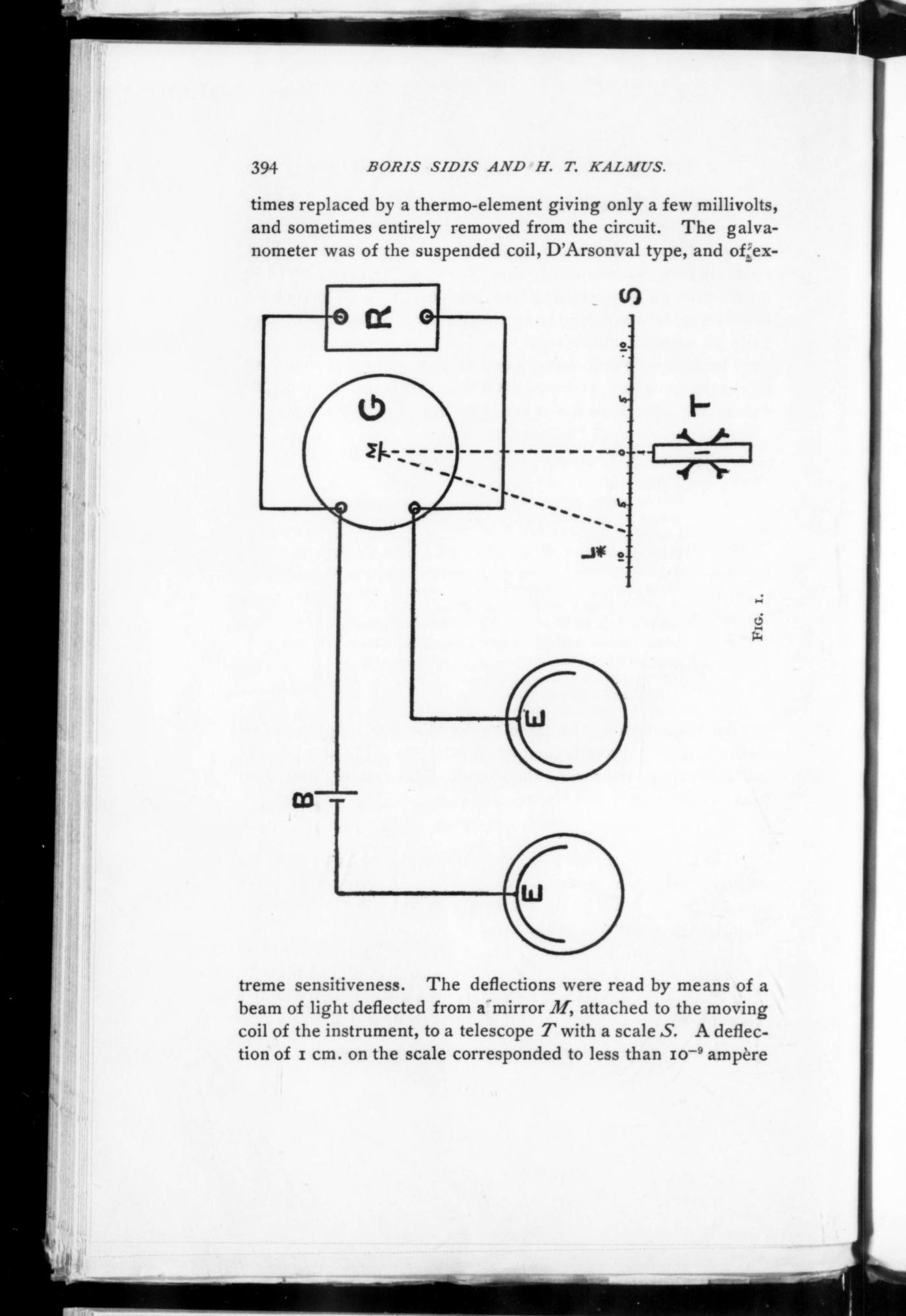
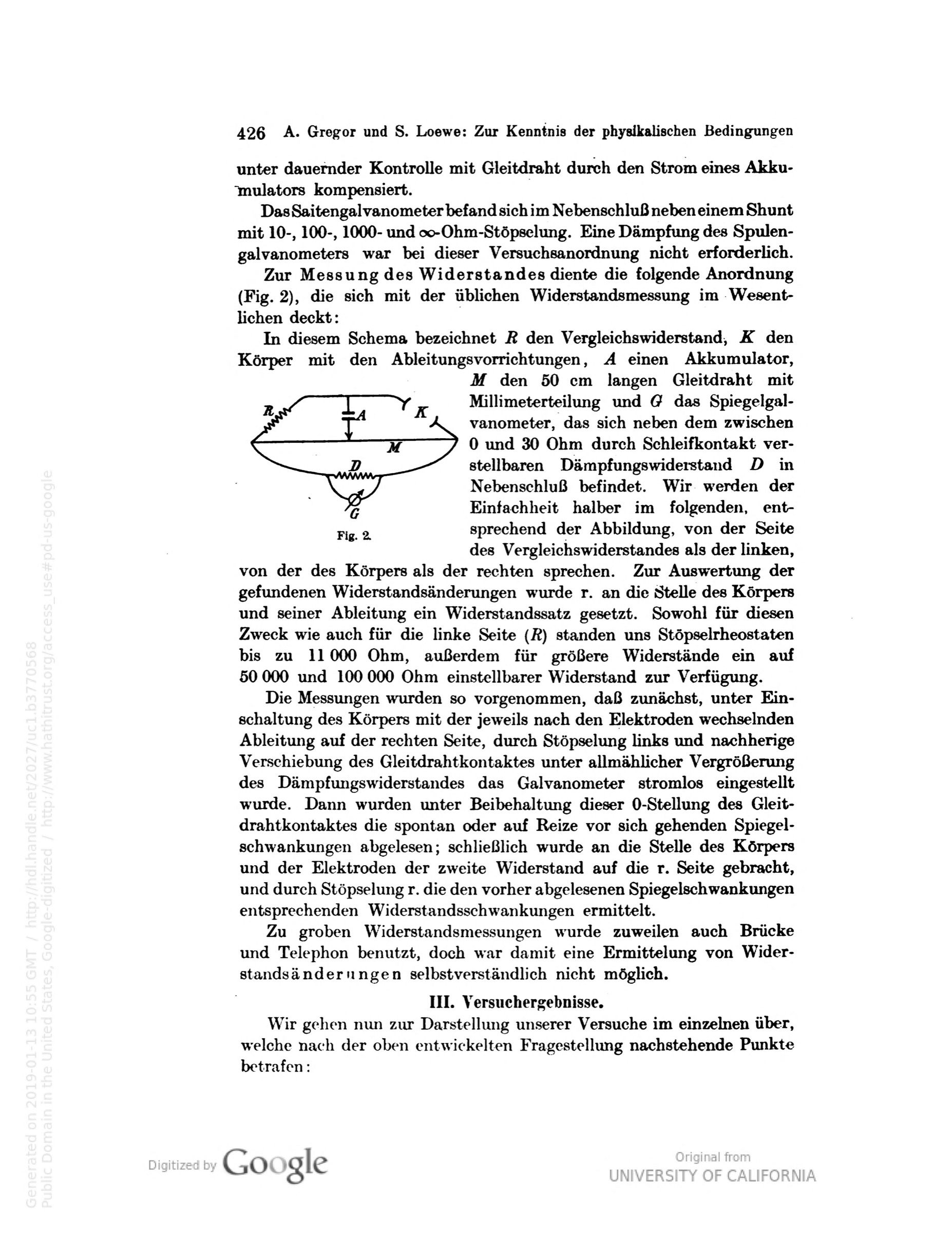
¿Cómo se encuentra el episodio cargado en una persona que no sabe que lo tiene? En 1900 el psicólogo Theodor Ziehen observa que cuando una palabra toca algo emocional la respuesta llega con retraso. Jung, en Zúrich, hace de ello un método: cien palabras, el tiempo de cada respuesta y un umbral calculado para cada sujeto. Donde la respuesta tarda, o la persona repite la palabra, o la entiende mal, ahí debajo hay algo. Desde 1907 le pone al lado un galvanómetro, que marca la reacción de la piel incluso cuando la persona no muestra nada.

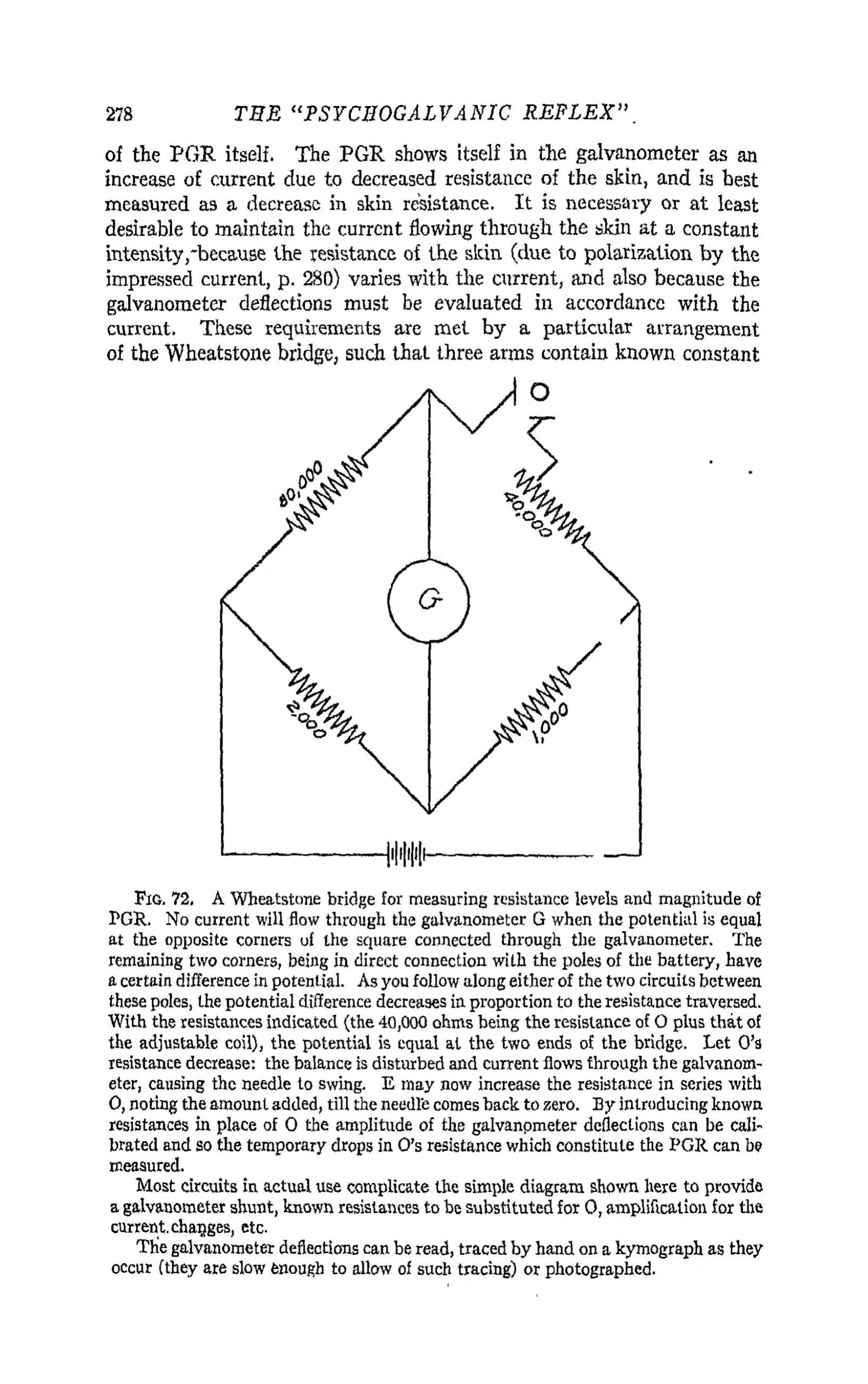
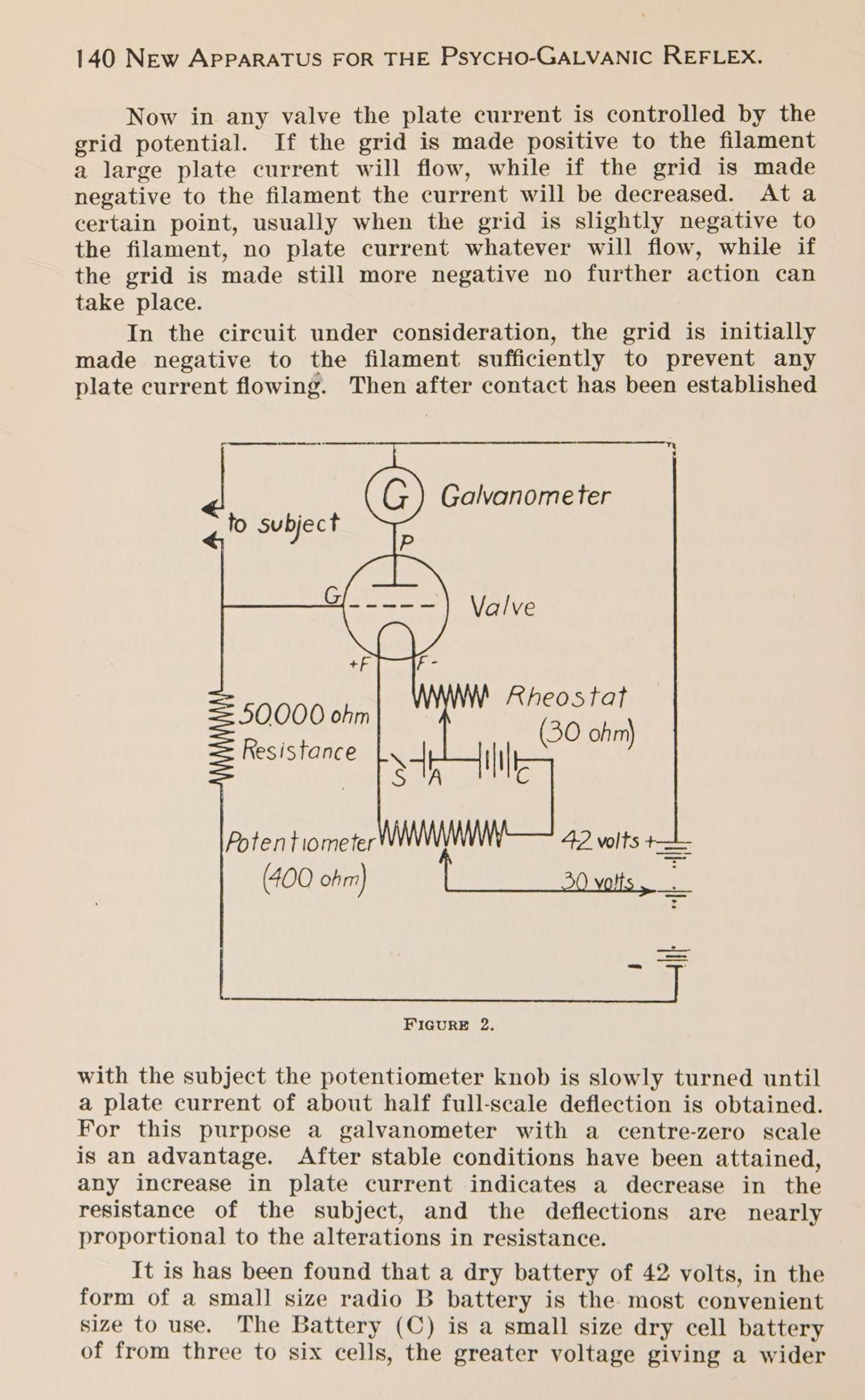
En los treinta años siguientes ese instrumento se convierte en un puente con un mando que devuelve la aguja a cero, y luego en una caja con una válvula. En 1951 Volney Mathison patenta una versión; Hubbard la adopta. Esta parte tiene una historia propia, con los esquemas.

El nudo de 1950

Un vínculo directo con esta historia lo dejó escrito negro sobre blanco el autor. En el artículo de mayo de 1950 Hubbard cuenta que pasó revista a los métodos existentes, y de uno dice:

«La narcosíntesis parecía una buena pista, hasta que se descubrieron algunos casos que habían sido “curados” con la narcosíntesis. Se volvieron a trabajar con la técnica, solo para descubrir qué había ocurrido. […] Parecía hacer algo más allá de lo que se suponía que hacía, y ese algo más era malo.»

«Narco-synthesis seemed a good lead, until some cases were discovered which had been ‘cured’ by narco-synthesis. They were reworked with the technique just to discover what had occurred. […] It seemed to do something beyond what it was supposed to do and that something beyond was bad.» — Astounding Science Fiction, mayo de 1950.

Conocía, pues, la técnica de los médicos militares, la había considerado y la descartó, junto con la hipnosis («no se puede hipnotizar a todo el mundo»). Es la misma conclusión a la que el ejército había llegado un año antes, por la misma razón: el fármaco le quita a la persona el recuerdo de lo que ha hecho.

Puestas en fila, las piezas son estas.

En el libro de 1950Ya existíaDónde
Una huella permanente que registra todo el momento y se reactiva a partir de un fragmentosíSemon 1904, Bleuler 1916
Una carga que permanece y da síntomas físicossíBreuer y Freud 1895
Episodios ligados en cadena, que hay que remontar hasta el primerosíFreud 1895, Janet 1898
Repetir hasta que la reacción se apagasí, en laboratorioPávlov 1927
Volver al episodio y contarlo en presentesípelículas del ejército 1944–46
La persona debe permanecer consciente y recordarsí, como criterioJanet 1919, Grinker y Spiegel 1945
Dolor físico con pérdida de consciencia como base de todo, antes del episodio emocionalnono encontrado en ninguna fuente
El registro antes del nacimientonono encontrado
Un método sin fármaco y sin hipnosis, declarado aplicable a cualquieranoJanet declara no tenerlo; los militares usan el fármaco

Qué se saca de ello

Lo primero es que el edificio no está en el aire. Huella, carga, cadena, regreso al episodio, necesidad del recuerdo consciente: son ideas de Semon, Bleuler, Freud, Janet, Pávlov y los médicos del ejército estadounidense, publicadas en sedes académicas. Quien las despacha como fantasía de un escritor tiene que despacharlos primero a ellos.

Lo segundo es que ninguno de ellos las había reunido. Semon era zoólogo y no trataba a nadie. Bleuler tenía la huella pero no un procedimiento. Freud tenía la cadena y trabajaba con la hipnosis y la presión en la frente. Janet tenía el procedimiento y no sabía transmitirlo. Pávlov trabajaba con perros. Los militares tenían la sesión pero dependían del barbitúrico. Cada uno sostenía un hilo.

Lo tercero es la paradoja de los tiempos. Justo cuando la psiquiatría abandona esta línea, porque su método no ha superado el balance de 1949, alguien de fuera recoge los hilos, quita el fármaco, añade un criterio propio y declara haber hecho de ello un procedimiento. La reacción de los médicos en 1950 golpea esa declaración, no las ideas de partida, que eran las suyas.

Qué está demostrado y qué no

Demostrado en los textos: que cada elemento existía antes de 1950, en el autor y el año indicados; que Hubbard conocía la narcosíntesis y la descartó; que tres elementos no aparecen en ninguna de las fuentes examinadas.

No demostrado: que Hubbard leyera a Semon, Bleuler, Janet o Freud. El libro de 1950 no los cita (Pávlov aparece una vez). Este artículo dice que las ideas estaban disponibles, no de quién las tomó.

Fuera del perímetro: si la teoría es verdadera y si el procedimiento da los resultados declarados. Es una cuestión de casos medidos, no de historia.

Límites de las fuentes: Freud se cita por la traducción inglesa de la época, no por el alemán; el balance del ejército de 1949 se da aquí solo en traducción; «no encontrado» significa no encontrado en las fuentes examinadas, que son muchas pero no todas.
Fuentes

Breuer y Freud, Studien über Hysterie, 1895 · Janet, Névroses et idées fixes, 1898; «L’amnésie et la dissociation des souvenirs par l’émotion», 1904; Les médications psychologiques, 1919 · Semon, Die Mneme, 1904 · Jung, Diagnostische Assoziationsstudien, 1906 · Bleuler, Lehrbuch der Psychiatrie, 1916 · Russell, The Analysis of Mind, 1921 · Pávlov, Conditioned Reflexes, 1927 · Kardiner, The Traumatic Neuroses of War, 1941 · película del Departamento de Guerra, 1944, y Let There Be Light, 1946 · Grinker y Spiegel, Men Under Stress, 1945 · Hanson (ed.), Combat Psychiatry, 1949 · Hubbard, «Dianetics: The Evolution of a Science», Astounding Science Fiction, mayo de 1950.

До Дианетики: пять нитей и один узел

Italiano · English · Français · Deutsch · Русский · Español

В мае 1950 года выходит книга, в которой говорится о постоянных следах, о заряде, о цепях эпизодов и о методе, позволяющем их ослабить. Она почти никого не цитирует. И всё же у каждой её части есть документированная история длиной в полвека, в дисциплинах, которые между собой не общались.

Все цитаты прочитаны по оригинальным текстам. В конце: что доказано, а что нет.

1900191019201930194019501960до 1940 года шкала сжатаИндикаторСледЗаряд и цепьПроцедурапсихиатрия уходит:препараты, руководстваВоенная медицинаприбор 1951задержкакоммуникации 1953патент 1966Циген 1900Юнг 1904–07мост 1912Вудвортс 1938Матисон 1951Земон 1904Блейлер 1916Рассел 1921Брейер и Фрейд 1895Жане 1898Павлов 1927Жане 1904Жане 1919Кардинер 1941Гринкер и Шпигель 1945Хэнсон 1949армейские фильмы 1944, 19461950
Каждая точка — текст, прочитанный в оригинале. Четыре нити входят в узел 1950 года; индикатор присоединяется сразу после. Военная медицина отдаёт узлу одну ветвь, а затем уходит другой дорогой.

Схема читается слева направо. Каждый цвет — это нить, и вы найдёте его в заголовках ниже.

След

Слово «энграмма» (в русских текстах по Дианетике пишут «инграмма») придумал немецкий зоолог Рихард Земон в 1904 году. Его тезис: всякий раздражитель оставляет в живом веществе изменение, которое сохраняется:

«В очень многих случаях можно показать, что раздражимое вещество организма после действия и прекращения раздражителя оказывается изменённым надолго. Я называю это действие раздражителей их энграфическим действием, потому что оно, так сказать, врезается или вписывается в органическое вещество. Вызванное таким образом изменение органического вещества я называю энграммой данного раздражителя.»

«…nach Einwirkung und Wiederaufhören eines Reizes […] dauernd verändert ist. Ich bezeichne diese Wirkung der Reize als ihre engraphische Wirkung, weil sie sich in die organische Substanz sozusagen eingräbt oder einschreibt. Die so bewirkte Veränderung der organischen Substanz bezeichne ich als das Engramm des betreffenden Reizes.» — Semon, Die Mneme, 1904.

Земон добавляет две важные вещи. Энграмма записывает всё, что присутствовало в тот момент, а не только главный раздражитель. И достаточно, чтобы вернулся один фрагмент той ситуации, чтобы вновь ожило целое.

В 1916 году Эйген Блейлер, самый авторитетный немецкоязычный психиатр, вводит этот термин в свой учебник. Он употребляет его десятки раз, как обычное слово, и делает шаг, которого не хватало Земону:

«Забывание, таким образом, как правило, основано не на исчезновении энграмм, а на невозможности оживить их в виде воспоминаний.»

«Das Vergessen beruht also in der Regel nicht auf einem Verschwinden der Engramme, sondern auf einer Unmöglichkeit, diese als Erinnerungen zu beleben.» — Bleuler, Lehrbuch der Psychiatrie, 1916.

Причина блокировки, пишет он, лежит «прежде всего в аффективных препятствиях». След цел, вызвать его нельзя, и препятствие это эмоциональное. В 1921 году Бертран Рассел излагает всё это по-английски, в широко разошедшейся книге. Значит, в 1950 году «engram» — слово, которое образованный англоязычный читатель мог знать.

Заряд и цепь

В 1895 году Брейер и Фрейд публикуют «Исследования истерии». Главная мысль: эмоциональный эпизод, заряд которого не разрядился, остаётся активным и вызывает симптомы в теле; если человек вспоминает его со всей его эмоцией, симптом отступает. Фрейд описывает и то, как эпизоды связаны между собой: по сходству, вокруг ядра.

«Группировку сходных воспоминаний во множество линейных наслоений, как в связке документов, я назвал образованием темы.»

«The grouping of similar reminiscences in a multiplicity of linear stratifications, as represented in a bundle of documents […] I have designated as the formation of a theme.» — Freud, 1895, в английском переводе того времени.

И он замечает, что эпизод, с которого ряд действительно начался, всплывает последним. Три года спустя Пьер Жане в Париже описывает то же самое вдоль оси времени:

«Когда удалена одна навязчивая идея, с удивлением видишь, как возникает другая. Это старая идея, более ранняя, чем та, которую только что лечили, и она появляется вновь. Когда удалена и она, оказываешься перед третьей одержимостью, существовавшей ещё раньше, и приходится проходить в обратном порядке главные навязчивые идеи, мучившие жизнь больного.»

«Quand on a enlevé une idée fixe, on est tout étonné d’en voir surgir une autre… C’est une idée ancienne, antérieure à celle que l’on vient de traiter et qui réapparaît. Celle-ci enlevée à son tour, on se trouve en présence d’une troisième obsession qui avait existé antérieurement et on est obligé de repasser en ordre inverse, les principales idées fixes qui ont tourmenté la vie du malade.» — Janet, Névroses et idées fixes, 1898.

Жане добавляет, что самые старые — самые стойкие. В 1927 году по-английски выходит книга Павлова об условных рефлексах, которая придаёт двум из этих идей форму, измеренную в лаборатории. Раздражитель, похожий на исходный, вызывает тот же ответ. А если предъявлять раздражитель снова без последствий, ответ падает, проба за пробой, до нуля: это принцип повторения до тех пор, пока реакции больше нет, с точкой остановки, отсчитанной в каплях слюны.

Процедура

Ближе всех к методу снова Жане. В 1904 году он публикует случай Ирен, молодой женщины, которая утратила память о смерти матери и переживает её заново в приступах, не зная об этом. Он описывает технику, порядок, в котором нужно идти назад, сигнал, по которому остановиться, и измеряет пациентку до и после. В 1919 году он формулирует критерий успеха:

«Ситуация хорошо ликвидирована, хорошо усвоена лишь тогда, когда мы отреагировали не только внешне, своими движениями, но и внутренне — словами, которые мы обращаем к самим себе, построением рассказа о событии для других и для самих себя и помещением этого рассказа на своё место как главы нашей собственной истории.»

«Une situation n’est bien liquidée, bien assimilée que lorsque nous avons réagi non seulement extérieurement par nos mouvements, mais encore intérieurement par les paroles que nous nous adressons à nous-mêmes, par l’organisation du récit de l’événement aux autres et à nous-mêmes et par la mise en place de ce récit comme un chapitre de notre propre histoire.» — Janet, Les médications psychologiques, II, 1919, с. 273.

То есть: разрядки недостаточно, человек должен суметь рассказать эпизод в бодрствующем состоянии и поставить его на место. В той же книге Жане признаёт предел: в случаях, которые казались ему одинаковыми, он делал то же самое и ничего не добивался. У него есть метод, который работает в его руках, но не такой, которому можно научить.

Военная медицина

Вторая мировая война даёт тысячи солдат с параличами, немотой и амнезией без ранения. Американские военные врачи возвращаются к эпизоду: вводят барбитурат, возвращают солдата на поле боя и заставляют пережить его заново. Армия снимает это на плёнку, чтобы обучать других врачей. В фильме 1944 года слышно:

«Сейчас ты снова на поле боя. Что ты делаешь?»

«You’re back on the battlefield now. What are you doing?» — учебный фильм Военного министерства США, 1944.

Возвращение к эпизоду, рассказ в настоящем времени, повторение: все движения сессии уже здесь. Гринкер и Шпигель, которые в 1945 году пишут основное руководство, предупреждают, однако, что разрядка под препаратом — ещё не лечение:

«Пациент должен быть в состоянии помнить свою эмоциональную абреакцию. Иначе эпизод был лишь извержением или взрывом напряжения, которое наверняка накопится снова.»

«…the patient should be able to remember […] his emotional abreaction. Otherwise the episode has been only an eruption or explosion of tension, which is certain to rebuild.» — Grinker и Spiegel, Men Under Stress, 1945, с. 392.

Это критерий Жане. В 1949 году официальный итоговый обзор армии обращает его против метода: техника с препаратом «не даёт пациенту понимания, поскольку сессия почти полностью забывается», а течение болезни «редко изменяется сколько-нибудь значительно».

В этот момент психиатрия сходит с пути травмы. Она делает это до появления современных психотропных препаратов и по технической причине: метод, который у неё был, не выдержал проверки. В последующие годы выживает то, что можно запатентовать или свести к руководству.

Индикатор

Как найти заряженный эпизод у человека, который не знает, что он у него есть? В 1900 году психолог Теодор Циген замечает, что, когда слово задевает что-то эмоциональное, ответ приходит с опозданием. Юнг в Цюрихе делает из этого метод: сто слов, время каждого ответа и порог, рассчитанный для каждого испытуемого. Там, где ответ запаздывает, или человек повторяет слово, или понимает его неверно, — там под ним что-то есть. С 1907 года он ставит рядом гальванометр, который отмечает реакцию кожи, даже когда человек ничего не показывает.

За следующие тридцать лет этот прибор превращается в мост с ручкой, возвращающей стрелку на ноль, затем в коробку с лампой. В 1951 году Волни Матисон патентует свою версию; Хаббард берёт её на вооружение. У этой части своя история, со схемами.

Узел 1950 года

Прямая связь с этой историей записана чёрным по белому самим автором. В статье мая 1950 года Хаббард рассказывает, что пересмотрел существующие методы, и об одном говорит:

«Наркосинтез казался хорошей зацепкой, пока не обнаружились несколько случаев, которые были „вылечены“ наркосинтезом. Их проработали заново с помощью техники, просто чтобы выяснить, что произошло. […] Он, казалось, делал что-то сверх того, что от него ожидалось, и это «что-то сверх» было вредным.»

«Narco-synthesis seemed a good lead, until some cases were discovered which had been ‘cured’ by narco-synthesis. They were reworked with the technique just to discover what had occurred. […] It seemed to do something beyond what it was supposed to do and that something beyond was bad.» — Astounding Science Fiction, май 1950.

Значит, он знал технику военных врачей, рассмотрел её и отбросил, вместе с гипнозом («загипнотизировать можно не каждого»). Это тот же вывод, к которому армия пришла годом раньше, по той же причине: препарат отнимает у человека память о том, что он сделал.

Если выстроить части в ряд, получается вот что.

В книге 1950 годаУже существовалоГде
Постоянный след, который записывает весь момент и оживает от одного фрагментадаЗемон 1904, Блейлер 1916
Заряд, который остаётся и даёт телесные симптомыдаБрейер и Фрейд 1895
Эпизоды, связанные в цепь, по которой идут назад до первогодаФрейд 1895, Жане 1898
Повторять, пока реакция не угаснетда, в лабораторииПавлов 1927
Вернуться к эпизоду и рассказать его в настоящем временидаармейские фильмы 1944–46
Человек должен оставаться в сознании и помнитьда, как критерийЖане 1919, Гринкер и Шпигель 1945
Физическая боль с потерей сознания как основа всего, прежде эмоционального эпизоданетне найдено ни в одном источнике
Запись до рождениянетне найдено
Метод без препарата и без гипноза, объявленный применимым к любомунетЖане заявляет, что у него такого нет; военные используют препарат

Что из этого следует

Первое: конструкция не взята с потолка. След, заряд, цепь, возвращение к эпизоду, необходимость сознательного воспоминания — это идеи Земона, Блейлера, Фрейда, Жане, Павлова и врачей американской армии, опубликованные в академических изданиях. Тот, кто отмахивается от них как от фантазии писателя, должен сначала отмахнуться от этих авторов.

Второе: никто из них не собрал их вместе. Земон был зоологом и никого не лечил. У Блейлера был след, но не было процедуры. У Фрейда была цепь, и он работал с гипнозом и надавливанием на лоб. У Жане была процедура, но он не умел её передать. Павлов работал с собаками. У военных была сессия, но они зависели от барбитурата. Каждый держал одну нить.

Третье — парадокс времени. Именно тогда, когда психиатрия оставляет эту линию, потому что её метод не выдержал итоговой проверки 1949 года, кто-то со стороны собирает нити, убирает препарат, добавляет собственный критерий и заявляет, что сделал из этого процедуру. Реакция врачей в 1950 году бьёт по этому заявлению, а не по исходным идеям, которые были их собственными.

Что доказано, а что нет

Доказано по текстам: что каждый элемент существовал до 1950 года, у указанного автора и в указанном году; что Хаббард знал наркосинтез и отверг его; что три элемента не встречаются ни в одном из изученных источников.

Не доказано: что Хаббард читал Земона, Блейлера, Жане или Фрейда. Книга 1950 года их не цитирует (Павлов упомянут один раз). Эта статья говорит, что идеи были доступны, а не у кого он их взял.

За рамками: верна ли теория и даёт ли процедура заявленные результаты. Это вопрос измеренных случаев, а не истории.

Ограничения источников: Фрейд цитируется по английскому переводу того времени, а не по немецкому тексту; итоговый обзор армии 1949 года приведён здесь только в переводе; «не найдено» означает не найдено в изученных источниках, которых много, но не все.

Источники

Breuer и Freud, Studien über Hysterie, 1895 · Janet, Névroses et idées fixes, 1898; «L’amnésie et la dissociation des souvenirs par l’émotion», 1904; Les médications psychologiques, 1919 · Semon, Die Mneme, 1904 · Jung, Diagnostische Assoziationsstudien, 1906 · Bleuler, Lehrbuch der Psychiatrie, 1916 · Russell, The Analysis of Mind, 1921 · Pavlov, Conditioned Reflexes, 1927 · Kardiner, The Traumatic Neuroses of War, 1941 · фильм Военного министерства США, 1944, и Let There Be Light, 1946 · Grinker и Spiegel, Men Under Stress, 1945 · Hanson (ред.), Combat Psychiatry, 1949 · Hubbard, «Dianetics: The Evolution of a Science», Astounding Science Fiction, май 1950.

Vor der Dianetik: fünf Fäden und ein Knoten

Italiano · English · Français · Deutsch · Русский · Español

Im Mai 1950 erscheint ein Buch, das von bleibenden Spuren spricht, von Ladung, von Ketten von Erlebnissen und von einer Methode, sie abzubauen. Es zitiert fast niemanden. Und doch hat jedes seiner Stücke eine belegte Geschichte, ein halbes Jahrhundert lang, in Fächern, die nicht miteinander sprachen.

Alle Zitate wurden in den Originaltexten gelesen. Am Ende: was belegt ist und was nicht.

1900191019201930194019501960Maßstab vor 1940 gestauchtDer IndikatorDie SpurLadung, KetteDas Verfahrendie Psychiatrie geht:Medikamente, HandbücherKriegsmedizinInstrument 1951Kommunikations-verzögerung 1953Patent 1966Ziehen 1900Jung 1904–07die Brücke 1912Woodworth 1938Mathison 1951Semon 1904Bleuler 1916Russell 1921Breuer und Freud 1895Janet 1898Pawlow 1927Janet 1904Janet 1919Kardiner 1941Grinker und Spiegel 1945Hanson 1949Armeefilme 1944, 19461950
Jeder Punkt ist ein im Original gelesener Text. Vier Fäden laufen in den Knoten von 1950; der Indikator kommt gleich danach hinzu. Die Kriegsmedizin gibt einen Zweig an den Knoten ab und geht dann einen anderen Weg.

Das Schema liest sich von links nach rechts. Jede Farbe ist ein Faden, und man findet sie in den Überschriften unten wieder.

Die Spur

Das Wort „Engramm“ prägt ein deutscher Zoologe, Richard Semon, im Jahr 1904. Seine These: Jeder Reiz hinterlässt in der lebenden Substanz eine Veränderung, die bleibt:

„…nach Einwirkung und Wiederaufhören eines Reizes […] dauernd verändert ist. Ich bezeichne diese Wirkung der Reize als ihre engraphische Wirkung, weil sie sich in die organische Substanz sozusagen eingräbt oder einschreibt. Die so bewirkte Veränderung der organischen Substanz bezeichne ich als das Engramm des betreffenden Reizes.“

— Semon, Die Mneme, 1904.

Semon fügt zwei Dinge hinzu, die zählen. Das Engramm zeichnet alles auf, was in jenem Augenblick gegenwärtig war, nicht nur den Hauptreiz. Und es genügt, dass ein Bruchstück jener Situation wiederkehrt, damit das Ganze wieder aktiv wird.

1916 nimmt Eugen Bleuler, der angesehenste Psychiater deutscher Sprache, den Begriff in sein Lehrbuch auf. Er verwendet ihn Dutzende Male, wie ein gewöhnliches Wort, und tut den Schritt, der Semon fehlte:

„Das Vergessen beruht also in der Regel nicht auf einem Verschwinden der Engramme, sondern auf einer Unmöglichkeit, diese als Erinnerungen zu beleben.“

— Bleuler, Lehrbuch der Psychiatrie, 1916.

Die Ursache der Sperre, schreibt er, liege „vor allem in affektiven Hindernissen“. Spur unversehrt, Abruf verhindert, und das Hindernis ist emotional. 1921 legt Bertrand Russell all das auf Englisch dar, in einem weit verbreiteten Buch. 1950 ist „engram“ also ein Wort, das ein gebildeter englischsprachiger Leser kennen konnte.

Die Ladung und die Kette

1895 veröffentlichen Breuer und Freud die Studien über Hysterie. Der Kerngedanke: Ein emotionales Erlebnis, dessen Ladung sich nicht entladen hat, bleibt wirksam und erzeugt Symptome im Körper; ruft die Person es mit seinem ganzen Affekt wieder wach, gibt das Symptom nach. Freud beschreibt auch, wie die Erlebnisse miteinander verbunden sind: durch Ähnlichkeit, um einen Kern herum.

„Die Gruppierung ähnlicher Reminiszenzen in einer Vielzahl linearer Schichtungen, wie in einem Bündel von Akten, habe ich als Bildung eines Themas bezeichnet.“

„The grouping of similar reminiscences in a multiplicity of linear stratifications, as represented in a bundle of documents […] I have designated as the formation of a theme.“ — Freud, 1895, in der zeitgenössischen englischen Übersetzung.

Und er bemerkt, dass das Erlebnis, mit dem die Reihe wirklich begann, zuletzt auftaucht. Drei Jahre später beschreibt Pierre Janet in Paris dasselbe entlang der Zeitachse:

„Wenn man eine fixe Idee beseitigt hat, ist man ganz erstaunt, eine andere auftauchen zu sehen. Es ist eine alte Idee, früher als die eben behandelte, die wieder erscheint. Ist auch diese beseitigt, steht man vor einer dritten Obsession, die früher bestanden hatte, und man ist gezwungen, in umgekehrter Reihenfolge die wichtigsten fixen Ideen noch einmal durchzugehen, die das Leben des Kranken gequält haben.“

„Quand on a enlevé une idée fixe, on est tout étonné d’en voir surgir une autre… C’est une idée ancienne, antérieure à celle que l’on vient de traiter et qui réapparaît. Celle-ci enlevée à son tour, on se trouve en présence d’une troisième obsession qui avait existé antérieurement et on est obligé de repasser en ordre inverse, les principales idées fixes qui ont tourmenté la vie du malade.“ — Janet, Névroses et idées fixes, 1898.

Janet fügt hinzu, dass die ältesten die hartnäckigsten sind. 1927 erscheint auf Englisch Pawlows Buch über die bedingten Reflexe, das zwei dieser Gedanken eine im Labor gemessene Form gibt. Ein dem ursprünglichen ähnlicher Reiz ruft dieselbe Antwort hervor. Und bietet man den Reiz ohne Folgen erneut dar, sinkt die Antwort, Versuch um Versuch, bis auf null: das Prinzip, zu wiederholen, bis keine Reaktion mehr da ist, mit einem Endpunkt, der in Speicheltropfen gezählt wird.

Das Verfahren

Einer Methode am nächsten kommt wiederum Janet. 1904 veröffentlicht er den Fall Irène, einer jungen Frau, die die Erinnerung an den Tod ihrer Mutter verloren hat und ihn in Anfällen wiedererlebt, ohne es zu wissen. Er beschreibt die Technik, die Reihenfolge, in der man zurückgeht, das Zeichen, bei dem man aufhört, und er misst die Patientin vorher und nachher. 1919 formuliert er das Kriterium des Gelingens:

„Eine Situation ist nur dann gut erledigt, gut assimiliert, wenn wir nicht bloß äußerlich durch unsere Bewegungen reagiert haben, sondern auch innerlich durch die Worte, die wir an uns selbst richten, durch die Gestaltung der Erzählung des Ereignisses für die anderen und für uns selbst und durch die Einordnung dieser Erzählung als ein Kapitel unserer eigenen Geschichte.“

„Une situation n’est bien liquidée, bien assimilée que lorsque nous avons réagi non seulement extérieurement par nos mouvements, mais encore intérieurement par les paroles que nous nous adressons à nous-mêmes, par l’organisation du récit de l’événement aux autres et à nous-mêmes et par la mise en place de ce récit comme un chapitre de notre propre histoire.“ — Janet, Les médications psychologiques, II, 1919, S. 273.

Das heißt: Der Ausbruch genügt nicht, die Person muss das Erlebnis im Wachzustand erzählen und an seinen Platz stellen können. Im selben Buch räumt Janet die Grenze ein: In Fällen, die ihm gleich erschienen, hat er dasselbe getan und nichts erreicht. Er hat eine Methode, die in seinen Händen funktioniert, keine, die sich lehren ließe.

Die Kriegsmedizin

Der Zweite Weltkrieg bringt Tausende Soldaten mit Lähmungen, Stummheit und Amnesien ohne Verletzung hervor. Die amerikanischen Militärärzte kehren zum Erlebnis zurück: Sie spritzen ein Barbiturat, führen den Soldaten auf das Schlachtfeld zurück und lassen es ihn wiedererleben. Die Armee filmt das, um andere Ärzte auszubilden. In einem Film von 1944 hört man:

„Du bist jetzt wieder auf dem Schlachtfeld. Was machst du gerade?“

„You’re back on the battlefield now. What are you doing?“ — Lehrfilm des Kriegsministeriums, 1944.

Rückkehr zum Erlebnis, Erzählung in der Gegenwartsform, Wiederholung: Die Handgriffe der Sitzung sind alle da. Grinker und Spiegel, die 1945 das maßgebliche Handbuch schreiben, warnen jedoch, dass der Ausbruch unter dem Medikament nicht die Heilung ist:

„Der Patient sollte sich an seine emotionale Abreaktion erinnern können. Sonst war die Episode nur ein Ausbruch oder eine Explosion von Spannung, die sich mit Sicherheit wieder aufbauen wird.“

„…the patient should be able to remember […] his emotional abreaction. Otherwise the episode has been only an eruption or explosion of tension, which is certain to rebuild.“ — Grinker und Spiegel, Men Under Stress, 1945, S. 392.

Das ist Janets Kriterium. 1949 wendet die offizielle Bilanz der Armee es gegen die Methode: Die Technik mit dem Medikament „verschafft dem Patienten keine Einsicht, da für die Sitzung eine fast vollständige Amnesie besteht“, und der Verlauf der Krankheit werde „selten nennenswert beeinflusst“.

An diesem Punkt verlässt die Psychiatrie den Weg des Traumas. Sie tut es, bevor die modernen Psychopharmaka kommen, und aus einem technischen Grund: Die Methode, die sie hatte, hielt der Prüfung nicht stand. In den folgenden Jahren überlebt, was sich patentieren oder auf ein Handbuch bringen lässt.

Der Indikator

Wie findet man das geladene Erlebnis bei einer Person, die nicht weiß, dass sie es hat? 1900 bemerkt der Psychologe Theodor Ziehen, dass die Antwort verspätet kommt, wenn ein Wort etwas Emotionales berührt. Jung in Zürich macht daraus eine Methode: hundert Wörter, die Zeit jeder Antwort und eine für jede Versuchsperson berechnete Schwelle. Wo die Antwort zögert oder die Person das Wort wiederholt oder es missversteht, liegt etwas darunter. Ab 1907 stellt er ein Galvanometer daneben, das die Reaktion der Haut anzeigt, auch wenn die Person nichts erkennen lässt.

In den folgenden dreißig Jahren wird aus diesem Instrument eine Brücke mit einem Knopf, der die Nadel auf null zurückbringt, dann ein Kasten mit einer Röhre. 1951 lässt Volney Mathison eine Version patentieren; Hubbard übernimmt sie. Dieser Teil hat eine eigene Geschichte, mit den Schaltbildern.

Der Knoten von 1950

Eine direkte Verbindung zu dieser Geschichte hat der Autor schwarz auf weiß festgehalten. Im Artikel vom Mai 1950 berichtet Hubbard, er habe die vorhandenen Methoden durchgesehen, und über eine sagt er:

„Die Narkosynthese schien eine gute Spur zu sein, bis man einige Fälle entdeckte, die durch Narkosynthese ‚geheilt‘ worden waren. Sie wurden mit der Technik noch einmal durchgearbeitet, nur um herauszufinden, was geschehen war. […] Sie schien etwas zu tun, das über das hinausging, was sie tun sollte, und dieses Etwas darüber hinaus war schlecht.“

„Narco-synthesis seemed a good lead, until some cases were discovered which had been ‘cured’ by narco-synthesis. They were reworked with the technique just to discover what had occurred. […] It seemed to do something beyond what it was supposed to do and that something beyond was bad.“ — Astounding Science Fiction, Mai 1950.

Er kannte also die Technik der Militärärzte, hatte sie erwogen und verworfen, zusammen mit der Hypnose („man kann nicht jeden hypnotisieren“). Es ist derselbe Schluss, zu dem die Armee ein Jahr zuvor gekommen war, aus demselben Grund: Das Medikament nimmt der Person die Erinnerung an das, was sie getan hat.

Nebeneinandergelegt sind die Stücke diese.

Im Buch von 1950Gab es schonWo
Eine bleibende Spur, die den ganzen Augenblick aufzeichnet und durch ein Bruchstück wieder aktiv wirdjaSemon 1904, Bleuler 1916
Eine Ladung, die bleibt und körperliche Symptome erzeugtjaBreuer und Freud 1895
Zu einer Kette verbundene Erlebnisse, bis zum ersten zurückzuverfolgenjaFreud 1895, Janet 1898
Wiederholen, bis die Reaktion erlischtja, im LaborPawlow 1927
Zum Erlebnis zurückkehren und es in der Gegenwartsform erzählenjaArmeefilme 1944–46
Die Person muss bei Bewusstsein bleiben und sich erinnernja, als KriteriumJanet 1919, Grinker und Spiegel 1945
Körperlicher Schmerz mit Bewusstseinsverlust als Grundlage von allem, vor dem emotionalen Erlebnisneinin keiner Quelle gefunden
Die Aufzeichnung vor der Geburtneinnicht gefunden
Eine Methode ohne Medikament und ohne Hypnose, die für jeden anwendbar sein sollneinJanet erklärt, sie nicht zu haben; die Militärärzte verwenden das Medikament

Was sich daraus ergibt

Das Erste ist, dass das Gebäude nicht aus der Luft gegriffen ist. Spur, Ladung, Kette, Rückkehr zum Erlebnis, Notwendigkeit der bewussten Erinnerung: Das sind Gedanken von Semon, Bleuler, Freud, Janet, Pawlow und den Ärzten der amerikanischen Armee, veröffentlicht an akademischen Orten. Wer sie als Phantasie eines Schriftstellers abtut, muss zuerst diese abtun.

Das Zweite ist, dass keiner von ihnen sie zusammengefügt hatte. Semon war Zoologe und behandelte niemanden. Bleuler hatte die Spur, aber kein Verfahren. Freud hatte die Kette und arbeitete mit Hypnose und dem Druck auf die Stirn. Janet hatte das Verfahren und konnte es nicht weitergeben. Pawlow arbeitete mit Hunden. Die Militärärzte hatten die Sitzung, hingen aber vom Barbiturat ab. Jeder hielt einen Faden.

Das Dritte ist das Paradox der Zeitpunkte. Gerade als die Psychiatrie diese Linie aufgibt, weil ihre Methode in der Bilanz von 1949 durchgefallen ist, sammelt jemand von außen die Fäden auf, lässt das Medikament weg, fügt ein eigenes Kriterium hinzu und erklärt, daraus ein Verfahren gemacht zu haben. Die Reaktion der Ärzte im Jahr 1950 trifft diese Erklärung, nicht die Ausgangsgedanken, die ihre eigenen waren.

Was belegt ist und was nicht

An den Texten belegt: dass jedes Element vor 1950 vorhanden war, beim angegebenen Autor und im angegebenen Jahr; dass Hubbard die Narkosynthese kannte und verwarf; dass drei Elemente in keiner der untersuchten Quellen vorkommen.

Nicht belegt: dass Hubbard Semon, Bleuler, Janet oder Freud gelesen hat. Das Buch von 1950 zitiert sie nicht (Pawlow kommt einmal vor). Dieser Artikel sagt, dass die Gedanken verfügbar waren, nicht, von wem er sie genommen hat.

Außerhalb des Rahmens: ob die Theorie wahr ist und ob das Verfahren die behaupteten Ergebnisse liefert. Das ist eine Frage gemessener Fälle, nicht der Geschichte.

Grenzen der Quellen: Freud wird nach der zeitgenössischen englischen Übersetzung zitiert, nicht nach dem deutschen Text; die Bilanz der Armee von 1949 wird hier nur in Übersetzung wiedergegeben; „nicht gefunden“ heißt nicht gefunden in den untersuchten Quellen, die viele sind, aber nicht alle.

Quellen

Breuer und Freud, Studien über Hysterie, 1895 · Janet, Névroses et idées fixes, 1898; „L’amnésie et la dissociation des souvenirs par l’émotion“, 1904; Les médications psychologiques, 1919 · Semon, Die Mneme, 1904 · Jung, Diagnostische Assoziationsstudien, 1906 · Bleuler, Lehrbuch der Psychiatrie, 1916 · Russell, The Analysis of Mind, 1921 · Pawlow, Conditioned Reflexes, 1927 · Kardiner, The Traumatic Neuroses of War, 1941 · Film des Kriegsministeriums, 1944, und Let There Be Light, 1946 · Grinker und Spiegel, Men Under Stress, 1945 · Hanson (Hrsg.), Combat Psychiatry, 1949 · Hubbard, „Dianetics: The Evolution of a Science“, Astounding Science Fiction, Mai 1950.

Avant la Dianétique : cinq fils et un nœud

Italiano · English · Français · Deutsch · Русский · Español

En mai 1950 paraît un livre qui parle de traces permanentes, de charge, de chaînes d’épisodes et d’une méthode pour les réduire. Il ne cite presque personne. Pourtant chacune de ses pièces a une histoire documentée, longue d’un demi-siècle, dans des disciplines qui ne se parlaient pas.

Toutes les citations ont été lues dans les textes originaux. À la fin : ce qui est démontré et ce qui ne l’est pas.

1900191019201930194019501960échelle comprimée avant 1940L’indicateurLa traceCharge et chaîneLa procédurela psychiatrie s’en va :médicaments et manuelsMédecine de guerreinstrument 1951retard de communication 1953brevet 1966Ziehen 1900Jung 1904–07le pont 1912Woodworth 1938Mathison 1951Semon 1904Bleuler 1916Russell 1921Breuer et Freud 1895Janet 1898Pavlov 1927Janet 1904Janet 1919Kardiner 1941Grinker et Spiegel 1945Hanson 1949films de l’armée 1944, 19461950
Chaque point est un texte lu dans l’original. Quatre fils entrent dans le nœud de 1950 ; l’indicateur s’y ajoute juste après. La médecine de guerre donne une branche au nœud, puis prend un autre chemin.

Le schéma se lit de gauche à droite. Chaque couleur est un fil, et on la retrouve dans les titres ci-dessous.

La trace

Le mot « engramme » est forgé par un zoologiste allemand, Richard Semon, en 1904. Sa thèse est que tout stimulus laisse dans la matière vivante une modification qui demeure :

« Dans de très nombreux cas on peut démontrer que la substance irritable de l’organisme, après l’action et la cessation d’un stimulus, est modifiée de façon durable. J’appelle cette action des stimuli leur action engraphique, parce qu’elle se grave ou s’inscrit pour ainsi dire dans la substance organique. La modification de la substance organique ainsi produite, je l’appelle l’engramme du stimulus en question. »

« …nach Einwirkung und Wiederaufhören eines Reizes […] dauernd verändert ist. Ich bezeichne diese Wirkung der Reize als ihre engraphische Wirkung, weil sie sich in die organische Substanz sozusagen eingräbt oder einschreibt. Die so bewirkte Veränderung der organischen Substanz bezeichne ich als das Engramm des betreffenden Reizes. » — Semon, Die Mneme, 1904.

Semon ajoute deux choses qui comptent. L’engramme enregistre tout ce qui était présent à ce moment-là, pas seulement le stimulus principal. Et il suffit qu’un fragment de cette situation revienne pour que l’ensemble se réactive.

En 1916 Eugen Bleuler, le psychiatre de langue allemande le plus influent, fait entrer le terme dans son manuel. Il l’emploie des dizaines de fois, comme un mot ordinaire, et fait le pas qui manquait à Semon :

« L’oubli ne repose donc pas, en règle générale, sur une disparition des engrammes, mais sur une impossibilité de les ranimer comme souvenirs. »

« Das Vergessen beruht also in der Regel nicht auf einem Verschwinden der Engramme, sondern auf einer Unmöglichkeit, diese als Erinnerungen zu beleben. » — Bleuler, Lehrbuch der Psychiatrie, 1916.

La cause du blocage, écrit-il, se trouve « avant tout dans des obstacles affectifs ». Trace intacte, rappel empêché, et l’empêchement est émotionnel. En 1921 Bertrand Russell expose tout cela en anglais, dans un livre largement diffusé. En 1950, donc, « engram » est un mot qu’un lecteur anglophone cultivé pouvait connaître.

La charge et la chaîne

En 1895 Breuer et Freud publient les Études sur l’hystérie. L’idée centrale : un épisode émotionnel dont la charge ne s’est pas déchargée reste actif et produit des symptômes dans le corps ; si la personne l’évoque avec toute son émotion, le symptôme cède. Freud décrit aussi comment les épisodes sont liés entre eux : par ressemblance, autour d’un noyau.

« Le groupement de réminiscences semblables en une multiplicité de stratifications linéaires, comme dans une liasse de documents, je l’ai désigné comme la formation d’un thème. »

« The grouping of similar reminiscences in a multiplicity of linear stratifications, as represented in a bundle of documents […] I have designated as the formation of a theme. » — Freud, 1895, dans la traduction anglaise d’époque.

Et il note que l’épisode par lequel la série a réellement commencé émerge en dernier. Trois ans plus tard Pierre Janet, à Paris, décrit la même chose le long de l’axe du temps :

« Quand on a enlevé une idée fixe, on est tout étonné d’en voir surgir une autre… C’est une idée ancienne, antérieure à celle que l’on vient de traiter et qui réapparaît. Celle-ci enlevée à son tour, on se trouve en présence d’une troisième obsession qui avait existé antérieurement et on est obligé de repasser en ordre inverse, les principales idées fixes qui ont tourmenté la vie du malade. »

— Janet, Névroses et idées fixes, 1898.

Janet ajoute que les plus anciennes sont les plus tenaces. En 1927 paraît en anglais le livre de Pavlov sur les réflexes conditionnés, qui donne à deux de ces idées une forme mesurée en laboratoire. Un stimulus semblable à l’original produit la même réponse. Et quand on présente de nouveau le stimulus sans conséquences, la réponse baisse, essai après essai, jusqu’à zéro : c’est le principe de répéter jusqu’à ce qu’il n’y ait plus de réaction, avec un point d’arrêt compté en gouttes de salive.

La procédure

Le plus proche d’une méthode est encore Janet. En 1904 il publie le cas d’Irène, une jeune femme qui a perdu le souvenir de la mort de sa mère et la revit en crises sans le savoir. Il décrit la technique, l’ordre dans lequel remonter, le signal auquel s’arrêter, et il mesure la patiente avant et après. En 1919 il formule le critère de réussite :

« Une situation n’est bien liquidée, bien assimilée que lorsque nous avons réagi non seulement extérieurement par nos mouvements, mais encore intérieurement par les paroles que nous nous adressons à nous-mêmes, par l’organisation du récit de l’événement aux autres et à nous-mêmes et par la mise en place de ce récit comme un chapitre de notre propre histoire. »

— Janet, Les médications psychologiques, II, 1919, p. 273.

C’est-à-dire : la décharge ne suffit pas, la personne doit pouvoir raconter l’épisode à l’état de veille et le mettre à sa place. Dans le même livre Janet reconnaît la limite : dans des cas qui lui paraissaient identiques il a fait les mêmes choses sans rien obtenir. Il a une méthode qui marche entre ses mains, pas une méthode qui puisse s’enseigner.

La médecine de guerre

La Seconde Guerre mondiale produit des milliers de soldats atteints de paralysies, de mutisme et d’amnésies sans lésion. Les médecins militaires américains reviennent à l’épisode : ils injectent un barbiturique, ramènent le soldat sur le champ de bataille et le lui font revivre. L’armée le filme pour former d’autres médecins. Dans un film de 1944 on entend :

« Tu es de nouveau sur le champ de bataille maintenant. Que fais-tu ? »

« You’re back on the battlefield now. What are you doing? » — film d’instruction du Département de la Guerre, 1944.

Retour à l’épisode, récit au présent, répétition : les gestes de la séance y sont tous. Grinker et Spiegel, qui écrivent le manuel de référence en 1945, avertissent cependant que la décharge sous médicament n’est pas la cure :

« Le patient doit pouvoir se souvenir de son abréaction émotionnelle. Sinon l’épisode n’a été qu’une éruption ou explosion de tension, qui se reconstituera à coup sûr. »

« …the patient should be able to remember […] his emotional abreaction. Otherwise the episode has been only an eruption or explosion of tension, which is certain to rebuild. » — Grinker et Spiegel, Men Under Stress, 1945, p. 392.

C’est le critère de Janet. En 1949 le bilan officiel de l’armée l’utilise contre la méthode : la technique sous médicament « ne fournit pas de compréhension au patient, puisqu’il y a une amnésie presque complète de la séance », et le cours de la maladie « est rarement influencé de façon significative ».

À ce moment-là la psychiatrie quitte la voie du trauma. Elle le fait avant l’arrivée des psychotropes modernes, et pour une raison technique : la méthode qu’elle avait ne résistait pas à l’épreuve. Dans les années suivantes survit ce qui peut se breveter ou se réduire à un manuel.

L’indicateur

Comment trouver l’épisode chargé chez une personne qui ne sait pas qu’elle l’a ? En 1900 le psychologue Theodor Ziehen remarque que lorsqu’un mot touche quelque chose d’émotionnel la réponse arrive en retard. Jung, à Zurich, en fait une méthode : cent mots, le temps de chaque réponse, et un seuil calculé pour chaque sujet. Là où la réponse tarde, où la personne répète le mot, ou comprend de travers, il y a quelque chose dessous. À partir de 1907 il y adjoint un galvanomètre, qui marque la réaction de la peau même quand la personne ne montre rien.

Dans les trente années suivantes cet instrument devient un pont avec un bouton qui ramène l’aiguille à zéro, puis une boîte avec une lampe. En 1951 Volney Mathison en brevette une version ; Hubbard l’adopte. Cette partie a une histoire à elle, avec les schémas.

Le nœud de 1950

Un lien direct avec cette histoire est écrit noir sur blanc par l’auteur. Dans l’article de mai 1950 Hubbard raconte avoir passé en revue les méthodes existantes, et de l’une il dit :

« La narcosynthèse semblait une bonne piste, jusqu’à ce qu’on découvre quelques cas qui avaient été “guéris” par la narcosynthèse. Ils furent retravaillés avec la technique, simplement pour découvrir ce qui s’était passé. […] Elle semblait faire quelque chose au-delà de ce qu’elle était censée faire, et ce quelque chose en plus était mauvais. »

« Narco-synthesis seemed a good lead, until some cases were discovered which had been ‘cured’ by narco-synthesis. They were reworked with the technique just to discover what had occurred. […] It seemed to do something beyond what it was supposed to do and that something beyond was bad. » — Astounding Science Fiction, mai 1950.

Il connaissait donc la technique des médecins militaires, l’avait examinée et l’a écartée, en même temps que l’hypnose (« on ne peut pas hypnotiser tout le monde »). C’est la conclusion à laquelle l’armée était arrivée un an plus tôt, pour la même raison : le médicament enlève à la personne le souvenir de ce qu’elle a fait.

Mises en file, les pièces sont celles-ci.

Dans le livre de 1950Existait déjàOù
Une trace permanente qui enregistre tout le moment et se réactive à partir d’un fragmentouiSemon 1904, Bleuler 1916
Une charge qui reste et donne des symptômes physiquesouiBreuer et Freud 1895
Des épisodes liés en chaîne, à remonter jusqu’au premierouiFreud 1895, Janet 1898
Répéter jusqu’à ce que la réaction s’éteigneoui, en laboratoirePavlov 1927
Revenir à l’épisode et le raconter au présentouifilms de l’armée 1944–46
La personne doit rester consciente et se souveniroui, comme critèreJanet 1919, Grinker et Spiegel 1945
La douleur physique avec perte de conscience comme base de tout, avant l’épisode émotionnelnonintrouvable dans les sources
L’enregistrement avant la naissancenonnon trouvé
Une méthode sans médicament et sans hypnose, déclarée applicable à n’importe quinonJanet déclare ne pas l’avoir ; les militaires utilisent le médicament

Ce qu’on en tire

La première chose est que l’édifice n’est pas bâti en l’air. Trace, charge, chaîne, retour à l’épisode, nécessité du souvenir conscient : ce sont des idées de Semon, Bleuler, Freud, Janet, Pavlov et des médecins de l’armée américaine, publiées dans des lieux académiques. Qui les écarte comme la fantaisie d’un écrivain doit d’abord les écarter, eux.

La deuxième est qu’aucun d’eux ne les avait réunies. Semon était zoologiste et ne soignait personne. Bleuler avait la trace mais pas de procédure. Freud avait la chaîne et travaillait avec l’hypnose et la pression sur le front. Janet avait la procédure et ne savait pas la transmettre. Pavlov travaillait sur des chiens. Les militaires avaient la séance mais dépendaient du barbiturique. Chacun tenait un fil.

La troisième est le paradoxe des dates. Au moment même où la psychiatrie abandonne cette ligne, parce que sa méthode a échoué au bilan de 1949, quelqu’un du dehors ramasse les fils, enlève le médicament, ajoute un critère à lui et déclare en avoir fait une procédure. La réaction des médecins en 1950 frappe cette déclaration, non les idées de départ, qui étaient les leurs.

Ce qui est démontré et ce qui ne l’est pas

Démontré sur les textes : que chaque élément existait avant 1950, chez l’auteur et à l’année indiqués ; que Hubbard connaissait la narcosynthèse et l’a écartée ; que trois éléments n’apparaissent dans aucune des sources examinées.

Non démontré : que Hubbard ait lu Semon, Bleuler, Janet ou Freud. Le livre de 1950 ne les cite pas (Pavlov apparaît une fois). Cet article dit que les idées étaient disponibles, non à qui il les a prises.

Hors du périmètre : si la théorie est vraie et si la procédure donne les résultats annoncés. C’est une question de cas mesurés, non d’histoire.

Limites des sources : Freud est cité d’après la traduction anglaise d’époque, non d’après l’allemand ; le bilan de l’armée de 1949 est donné ici seulement en traduction ; « non trouvé » signifie non trouvé dans les sources examinées, qui sont nombreuses mais pas toutes.

Sources

Breuer et Freud, Studien über Hysterie, 1895 · Janet, Névroses et idées fixes, 1898 ; « L’amnésie et la dissociation des souvenirs par l’émotion », 1904 ; Les médications psychologiques, 1919 · Semon, Die Mneme, 1904 · Jung, Diagnostische Assoziationsstudien, 1906 · Bleuler, Lehrbuch der Psychiatrie, 1916 · Russell, The Analysis of Mind, 1921 · Pavlov, Conditioned Reflexes, 1927 · Kardiner, The Traumatic Neuroses of War, 1941 · film du Département de la Guerre, 1944, et Let There Be Light, 1946 · Grinker et Spiegel, Men Under Stress, 1945 · Hanson (dir.), Combat Psychiatry, 1949 · Hubbard, « Dianetics: The Evolution of a Science », Astounding Science Fiction, mai 1950.

Before Dianetics: five threads and a knot

Italiano · English · Français · Deutsch · Русский · Español

In May 1950 a book comes out that speaks of permanent traces, of charge, of chains of incidents and of a method for reducing them. It cites almost no one. Yet every piece of it has a documented history, half a century long, in disciplines that did not talk to each other.

All quotations have been read in the original texts. At the end: what is demonstrated and what is not.

1900191019201930194019501960scale compressed before 1940The indicatorThe traceCharge and chainThe procedurepsychiatry walks away:drugs and manualsWar medicineinstrument 1951communication lag 1953patent 1966Ziehen 1900Jung 1904–07the bridge 1912Woodworth 1938Mathison 1951Semon 1904Bleuler 1916Russell 1921Breuer and Freud 1895Janet 1898Pavlov 1927Janet 1904Janet 1919Kardiner 1941Grinker and Spiegel 1945Hanson 1949army films 1944, 19461950
Each dot is a text read in the original. Four threads enter the knot of 1950; the indicator joins just afterwards. War medicine gives one branch to the knot and then takes another road.

The diagram reads from left to right. Each colour is a thread, and you will find it again in the headings below.

The trace

The word “engram” is coined by a German zoologist, Richard Semon, in 1904. His thesis is that every stimulus leaves in living matter a modification that remains:

“In very many cases it can be shown that the irritable substance of the organism, after the action and cessation of a stimulus, is permanently altered. I call this action of stimuli their engraphic action, because it digs or inscribes itself, so to speak, into the organic substance. The alteration of the organic substance thus produced I call the engram of the stimulus in question.”

“…nach Einwirkung und Wiederaufhören eines Reizes […] dauernd verändert ist. Ich bezeichne diese Wirkung der Reize als ihre engraphische Wirkung, weil sie sich in die organische Substanz sozusagen eingräbt oder einschreibt. Die so bewirkte Veränderung der organischen Substanz bezeichne ich als das Engramm des betreffenden Reizes.” — Semon, Die Mneme, 1904.

Semon adds two things that matter. The engram records everything that was present at that moment, not only the main stimulus. And it is enough for a fragment of that situation to return for the whole to be reactivated.

In 1916 Eugen Bleuler, the most authoritative German-speaking psychiatrist, brings the term into his textbook. He uses it dozens of times, as an ordinary word, and takes the step that Semon lacked:

“Forgetting, then, as a rule does not rest on a disappearance of the engrams, but on an impossibility of reviving them as memories.”

“Das Vergessen beruht also in der Regel nicht auf einem Verschwinden der Engramme, sondern auf einer Unmöglichkeit, diese als Erinnerungen zu beleben.” — Bleuler, Lehrbuch der Psychiatrie, 1916.

The cause of the block, he writes, lies “above all in affective obstacles”. Trace intact, recall prevented, and the impediment is emotional. In 1921 Bertrand Russell sets all this out in English, in a widely read book. In 1950, therefore, “engram” is a word that an educated English-speaking reader could know.

The charge and the chain

In 1895 Breuer and Freud publish the Studies on Hysteria. The central idea: an emotional incident whose charge has not been discharged remains active and produces symptoms in the body; if the person recalls it with all its emotion, the symptom gives way. Freud also describes how the incidents are linked to one another: by similarity, around a nucleus.

“The grouping of similar reminiscences in a multiplicity of linear stratifications, as represented in a bundle of documents […] I have designated as the formation of a theme.”

— Freud, 1895, in the English translation of the period.

And he notes that the incident with which the series really began emerges last. Three years later Pierre Janet, in Paris, describes the same thing along the axis of time:

“When one has removed a fixed idea, one is quite astonished to see another arise. It is an old idea, earlier than the one just treated, that reappears. This one removed in its turn, one finds oneself in the presence of a third obsession that had existed earlier, and one is obliged to go back in reverse order over the principal fixed ideas that have tormented the patient’s life.”

“Quand on a enlevé une idée fixe, on est tout étonné d’en voir surgir une autre… C’est une idée ancienne, antérieure à celle que l’on vient de traiter et qui réapparaît. Celle-ci enlevée à son tour, on se trouve en présence d’une troisième obsession qui avait existé antérieurement et on est obligé de repasser en ordre inverse, les principales idées fixes qui ont tourmenté la vie du malade.” — Janet, Névroses et idées fixes, 1898.

Janet adds that the oldest are the most tenacious. In 1927 Pavlov’s book on conditioned reflexes arrives in English, giving two of these ideas a form measured in the laboratory. A stimulus similar to the original one produces the same response. And when the stimulus is presented again without consequences the response falls, trial after trial, to zero: it is the principle of repeating until there is no more reaction, with a stopping point counted in drops of saliva.

The procedure

The closest to a method is again Janet. In 1904 he publishes the case of Irène, a young woman who has lost the memory of her mother’s death and relives it in crises without knowing it. He describes the technique, the order in which to go back, the signal at which to stop, and he measures the patient before and after. In 1919 he formulates the criterion of success:

“A situation is well liquidated, well assimilated, only when we have reacted not only outwardly by our movements, but also inwardly by the words we address to ourselves, by the organization of the account of the event to others and to ourselves, and by the putting of this account in its place as a chapter of our own history.”

“Une situation n’est bien liquidée, bien assimilée que lorsque nous avons réagi non seulement extérieurement par nos mouvements, mais encore intérieurement par les paroles que nous nous adressons à nous-mêmes, par l’organisation du récit de l’événement aux autres et à nous-mêmes et par la mise en place de ce récit comme un chapitre de notre propre histoire.” — Janet, Les médications psychologiques, II, 1919, p. 273.

That is: the outburst is not enough, the person must be able to tell the incident while awake and put it in its place. In the same book Janet admits the limit: in cases that seemed identical to him he did the same things and obtained nothing. He has a method that works in his hands, not one that can be taught.

War medicine

The Second World War produces thousands of soldiers with paralysis, mutism and amnesia without injury. The American army doctors go back to the incident: they inject a barbiturate, take the soldier back to the battlefield and have him relive it. The army films it to train other doctors. In a 1944 film one hears:

“You’re back on the battlefield now. What are you doing?”

— War Department training film, 1944.

Return to the incident, telling in the present tense, repetition: the moves of the session are all there. Grinker and Spiegel, who write the reference manual in 1945, warn however that the outburst under the drug is not the cure:

“…the patient should be able to remember […] his emotional abreaction. Otherwise the episode has been only an eruption or explosion of tension, which is certain to rebuild.”

— Grinker and Spiegel, Men Under Stress, 1945, p. 392.

It is Janet’s criterion. In 1949 the army’s official assessment uses it against the method: the drug technique “does not furnish insight to the patient, since there is an almost complete amnesia for the session”, and the course of the disease “is rarely influenced significantly”.

At that point psychiatry leaves the road of trauma. It does so before the modern psychiatric drugs arrive, and for a technical reason: the method it had did not stand up to the test. In the following years what survives is what can be patented or reduced to a manual.

The indicator

How does one find the charged incident in a person who does not know they have it? In 1900 the psychologist Theodor Ziehen notes that when a word touches something emotional the answer comes late. Jung, in Zurich, makes a method of it: a hundred words, the time of each answer, and a threshold calculated for each subject. Where the answer is slow, or the person repeats the word, or misunderstands, there is something underneath. From 1907 he sets beside it a galvanometer, which marks the reaction of the skin even when the person shows nothing.

In the following thirty years that instrument becomes a bridge with a knob that brings the needle back to zero, then a box with a valve. In 1951 Volney Mathison patents a version of it; Hubbard adopts it. This part has a story of its own, with the diagrams.

The knot of 1950

A direct link with this history is set down in black and white by the author. In the article of May 1950 Hubbard tells of having reviewed the existing methods, and of one he says:

“Narco-synthesis seemed a good lead, until some cases were discovered which had been ‘cured’ by narco-synthesis. They were reworked with the technique just to discover what had occurred. […] It seemed to do something beyond what it was supposed to do and that something beyond was bad.”

— Astounding Science Fiction, May 1950.

So he knew the technique of the army doctors, had considered it and discarded it, together with hypnosis (“you can’t hypnotize everybody”). It is the same conclusion the army had reached a year earlier, for the same reason: the drug takes away from the person the memory of what they have done.

Lined up, the pieces are these.

In the 1950 bookAlready existedWhere
A permanent trace that records the whole moment and is reactivated by a fragmentyesSemon 1904, Bleuler 1916
A charge that remains and gives physical symptomsyesBreuer and Freud 1895
Incidents linked in a chain, to be traced back to the firstyesFreud 1895, Janet 1898
Repeating until the reaction dies outyes, in the laboratoryPavlov 1927
Returning to the incident and telling it in the present tenseyesarmy films 1944–46
The person must stay conscious and rememberyes, as a criterionJanet 1919, Grinker and Spiegel 1945
Physical pain with loss of consciousness as the basis of everything, before the emotional incidentnonot found in any source
Recording before birthnonot found
A method without drugs and without hypnosis, declared applicable to anyonenoJanet says he does not have one; the army doctors use the drug

What follows from it

The first thing is that the structure is not built on air. Trace, charge, chain, return to the incident, the need for conscious recall: these are ideas of Semon, Bleuler, Freud, Janet, Pavlov and the doctors of the American army, published in academic venues. Whoever dismisses them as a writer’s fantasy must first dismiss them.

The second is that none of them had put them together. Semon was a zoologist and treated no one. Bleuler had the trace but no procedure. Freud had the chain and worked with hypnosis and pressure on the forehead. Janet had the procedure and could not pass it on. Pavlov worked on dogs. The army doctors had the session but depended on the barbiturate. Each held one thread.

The third is the paradox of timing. Just when psychiatry abandons this line, because its method failed the assessment of 1949, someone from outside gathers the threads, removes the drug, adds a criterion of his own and declares he has made a procedure of it. The doctors’ reaction in 1950 strikes at that declaration, not at the starting ideas, which were their own.

What is demonstrated and what is not

Demonstrated from the texts: that each element existed before 1950, in the author and year given; that Hubbard knew narcosynthesis and discarded it; that three elements appear in none of the sources examined.

Not demonstrated: that Hubbard read Semon, Bleuler, Janet or Freud. The 1950 book does not cite them (Pavlov appears once). This article says that the ideas were available, not from whom he took them.

Out of scope: whether the theory is true and whether the procedure gives the results claimed. That is a matter of measured cases, not of history.

Limits of the sources: Freud is quoted from the English translation of the period, not from the German; “not found” means not found in the sources examined, which are many but not all.

Sources

Breuer and Freud, Studien über Hysterie, 1895 · Janet, Névroses et idées fixes, 1898; “L’amnésie et la dissociation des souvenirs par l’émotion”, 1904; Les médications psychologiques, 1919 · Semon, Die Mneme, 1904 · Jung, Diagnostische Assoziationsstudien, 1906 · Bleuler, Lehrbuch der Psychiatrie, 1916 · Russell, The Analysis of Mind, 1921 · Pavlov, Conditioned Reflexes, 1927 · Kardiner, The Traumatic Neuroses of War, 1941 · War Department film, 1944, and Let There Be Light, 1946 · Grinker and Spiegel, Men Under Stress, 1945 · Hanson (ed.), Combat Psychiatry, 1949 · Hubbard, “Dianetics: The Evolution of a Science”, Astounding Science Fiction, May 1950.

Prima di Dianetics: cinque fili e un nodo

Italiano · English · Français · Deutsch · Русский · Español

Nel maggio 1950 esce un libro che parla di tracce permanenti, di carica, di catene di episodi e di un metodo per ridurli. Non cita quasi nessuno. Eppure ogni suo pezzo ha una storia documentata, lunga mezzo secolo, in discipline che fra loro non si parlavano.

Tutte le citazioni sono state lette sui testi originali. In fondo: cosa è dimostrato e cosa no.

1900191019201930194019501960scala compressa prima del 1940L’indicatoreLa tracciaCarica e catenaLa procedurala psichiatria se ne va:farmaci e manualiMedicina di guerrastrumento 1951ritardo di comunicazione 1953brevetto 1966Ziehen 1900Jung 1904–07il ponte 1912Woodworth 1938Mathison 1951Semon 1904Bleuler 1916Russell 1921Breuer e Freud 1895Janet 1898Pavlov 1927Janet 1904Janet 1919Kardiner 1941Grinker e Spiegel 1945Hanson 1949film dell’esercito 1944, 19461950
Ogni punto è un testo letto in originale. Quattro fili entrano nel nodo del 1950; l’indicatore si aggiunge subito dopo. La medicina di guerra dà un ramo al nodo e poi prende un’altra strada.

Lo schema si legge da sinistra a destra. Ogni colore è un filo, e lo ritrovi nei titoli qui sotto.

La traccia

La parola «engramma» la conia uno zoologo tedesco, Richard Semon, nel 1904. La sua tesi è che ogni stimolo lasci nella materia vivente una modificazione che resta:

«In moltissimi casi si può dimostrare che la sostanza irritabile dell’organismo, dopo l’azione e la cessazione di uno stimolo, è modificata in modo permanente. Chiamo questa azione degli stimoli la loro azione engrafica, perché per così dire si scava o si iscrive nella sostanza organica. La modificazione così prodotta la chiamo l’engramma dello stimolo.»

«…nach Einwirkung und Wiederaufhören eines Reizes […] dauernd verändert ist. Ich bezeichne diese Wirkung der Reize als ihre engraphische Wirkung, weil sie sich in die organische Substanz sozusagen eingräbt oder einschreibt. Die so bewirkte Veränderung der organischen Substanz bezeichne ich als das Engramm des betreffenden Reizes.» — Semon, Die Mneme, 1904.

Semon aggiunge due cose che contano. L’engramma registra tutto ciò che era presente in quel momento, non solo lo stimolo principale. E basta che torni un frammento di quella situazione perché si riattivi l’insieme.

Nel 1916 Eugen Bleuler, il più autorevole psichiatra di lingua tedesca, porta il termine nel suo manuale. Lo usa decine di volte, come parola ordinaria, e fa il passo che a Semon mancava:

«L’oblio dunque di regola non dipende da una scomparsa degli engrammi, ma dall’impossibilità di ravvivarli come ricordi.»

«Das Vergessen beruht also in der Regel nicht auf einem Verschwinden der Engramme, sondern auf einer Unmöglichkeit, diese als Erinnerungen zu beleben.» — Bleuler, Lehrbuch der Psychiatrie, 1916.

La causa del blocco, scrive, sta «soprattutto in ostacoli affettivi». Traccia intatta, richiamo impedito, e l’impedimento è emotivo. Nel 1921 Bertrand Russell espone tutto questo in inglese, in un libro di larga diffusione. Nel 1950, quindi, «engram» è una parola che un lettore colto di lingua inglese poteva conoscere.

La carica e la catena

Nel 1895 Breuer e Freud pubblicano gli Studi sull’isteria. L’idea centrale: un episodio emotivo la cui carica non si è scaricata resta attivo e produce sintomi nel corpo; se la persona lo rievoca con tutta la sua emozione, il sintomo cede. Freud descrive anche come gli episodi sono legati fra loro: per somiglianza, attorno a un nucleo.

«Il raggruppamento di reminiscenze simili in una molteplicità di stratificazioni lineari, come in un fascio di documenti, l’ho chiamato formazione di un tema.»

«The grouping of similar reminiscences in a multiplicity of linear stratifications, as represented in a bundle of documents […] I have designated as the formation of a theme.» — Freud, 1895, nella traduzione inglese d’epoca.

E nota che l’episodio con cui la serie è davvero cominciata emerge per ultimo. Tre anni dopo Pierre Janet, a Parigi, descrive la stessa cosa lungo l’asse del tempo:

«Quando si è tolta un’idea fissa, si è tutti stupiti di vederne sorgere un’altra. È un’idea antica, anteriore a quella appena trattata, che riappare. Tolta a sua volta questa, ci si trova davanti a una terza ossessione che era esistita anteriormente, e si è obbligati a ripercorrere in ordine inverso le principali idee fisse che hanno tormentato la vita del malato.»

«Quand on a enlevé une idée fixe, on est tout étonné d’en voir surgir une autre… C’est une idée ancienne, antérieure à celle que l’on vient de traiter et qui réapparaît. Celle-ci enlevée à son tour, on se trouve en présence d’une troisième obsession qui avait existé antérieurement et on est obligé de repasser en ordre inverse, les principales idées fixes qui ont tourmenté la vie du malade.» — Janet, Névroses et idées fixes, 1898.

Janet aggiunge che le più antiche sono le più tenaci. Nel 1927 arriva in inglese il libro di Pavlov sui riflessi condizionati, che dà a due di queste idee una forma misurata in laboratorio. Uno stimolo simile a quello originale produce la stessa risposta. E ripresentando lo stimolo senza conseguenze la risposta cala, prova dopo prova, fino a zero: è il principio di ripetere finché non c’è più reazione, con un punto d’arresto contato in gocce di saliva.

La procedura

Il più vicino a un metodo è ancora Janet. Nel 1904 pubblica il caso di Irène, una giovane che ha perso la memoria della morte della madre e la rivive in crisi senza saperlo. Descrive la tecnica, l’ordine in cui risalire, il segnale a cui fermarsi, e misura la paziente prima e dopo. Nel 1919 formula il criterio di riuscita:

«Una situazione è ben liquidata, ben assimilata, solo quando abbiamo reagito non soltanto esteriormente con i nostri movimenti, ma anche interiormente con le parole che rivolgiamo a noi stessi, con l’organizzazione del racconto dell’evento agli altri e a noi stessi, e con la messa a posto di questo racconto come un capitolo della nostra propria storia.»

«Une situation n’est bien liquidée, bien assimilée que lorsque nous avons réagi non seulement extérieurement par nos mouvements, mais encore intérieurement par les paroles que nous nous adressons à nous-mêmes, par l’organisation du récit de l’événement aux autres et à nous-mêmes et par la mise en place de ce récit comme un chapitre de notre propre histoire.» — Janet, Les médications psychologiques, II, 1919, p. 273.

Cioè: lo sfogo non basta, la persona deve poter raccontare l’episodio da sveglia e metterlo al suo posto. Nello stesso libro Janet ammette il limite: in casi che gli sembravano identici ha fatto le stesse cose senza ottenere niente. Ha un metodo che funziona nelle sue mani, non uno che si possa insegnare.

La medicina di guerra

La Seconda guerra mondiale produce migliaia di soldati con paralisi, mutismo e amnesie senza lesione. I medici militari americani tornano all’episodio: iniettano un barbiturico, riportano il soldato sul campo di battaglia e glielo fanno rivivere. L’esercito lo filma per addestrare altri medici. In un film del 1944 si sente:

«Ora sei di nuovo sul campo di battaglia. Cosa stai facendo?»

«You’re back on the battlefield now. What are you doing?» — film di addestramento del Dipartimento della Guerra, 1944.

Ritorno all’episodio, racconto al presente, ripetizione: i movimenti della seduta ci sono tutti. Grinker e Spiegel, che scrivono il manuale di riferimento nel 1945, avvertono però che lo sfogo sotto farmaco non è la cura:

«Il paziente deve poter ricordare la propria abreazione emotiva. Altrimenti l’episodio è stato soltanto un’eruzione o esplosione di tensione, che è certo si ricostituirà.»

«…the patient should be able to remember […] his emotional abreaction. Otherwise the episode has been only an eruption or explosion of tension, which is certain to rebuild.» — Grinker e Spiegel, Men Under Stress, 1945, p. 392.

È il criterio di Janet. Nel 1949 il bilancio ufficiale dell’esercito lo usa contro il metodo: la tecnica col farmaco «non fornisce comprensione al paziente, poiché vi è un’amnesia pressoché completa della seduta», e il decorso della malattia «è raramente influenzato in modo significativo».

A quel punto la psichiatria lascia la strada del trauma. Lo fa prima che arrivino gli psicofarmaci moderni, e per una ragione tecnica: il metodo che aveva non reggeva alla prova. Negli anni seguenti sopravvive ciò che si può brevettare o ridurre a manuale.

L’indicatore

Come si trova l’episodio carico in una persona che non sa di averlo? Nel 1900 lo psicologo Theodor Ziehen nota che quando una parola tocca qualcosa di emotivo la risposta arriva in ritardo. Jung, a Zurigo, ne fa un metodo: cento parole, il tempo di ogni risposta, e una soglia calcolata per ciascun soggetto. Dove la risposta tarda, o la persona ripete la parola, o fraintende, lì sotto c’è qualcosa. Dal 1907 ci affianca un galvanometro, che segna la reazione della pelle anche quando la persona non mostra nulla.

Nei trent’anni seguenti quello strumento diventa un ponte con una manopola che riporta l’ago a zero, poi una scatola con una valvola. Nel 1951 Volney Mathison ne brevetta una versione; Hubbard la adotta. Questa parte ha una storia a sé, con gli schemi.

Il nodo del 1950

Un legame diretto con questa storia è scritto nero su bianco dall’autore. Nell’articolo del maggio 1950 Hubbard racconta di aver passato in rassegna i metodi esistenti, e di uno dice:

«La narcosintesi sembrava una buona pista, finché non si scoprirono alcuni casi che erano stati “curati” con la narcosintesi. Furono rilavorati con la tecnica, solo per scoprire che cosa era successo. […] Sembrava fare qualcosa oltre ciò che ci si aspettava, e quel qualcosa in più era dannoso.»

«Narco-synthesis seemed a good lead, until some cases were discovered which had been ‘cured’ by narco-synthesis. They were reworked with the technique just to discover what had occurred. […] It seemed to do something beyond what it was supposed to do and that something beyond was bad.» — Astounding Science Fiction, maggio 1950.

Conosceva dunque la tecnica dei medici militari, l’aveva considerata e l’ha scartata, insieme all’ipnosi («non si può ipnotizzare chiunque»). È la stessa conclusione a cui l’esercito era arrivato un anno prima, per la stessa ragione: il farmaco toglie alla persona il ricordo di ciò che ha fatto.

Messi in fila, i pezzi sono questi.

Nel libro del 1950Esisteva giàDove
Una traccia permanente che registra tutto il momento e si riattiva da un frammentosìSemon 1904, Bleuler 1916
Una carica che resta e dà sintomi fisicisìBreuer e Freud 1895
Episodi legati in catena, da risalire fino al primosìFreud 1895, Janet 1898
Ripetere finché la reazione si spegnesì, in laboratorioPavlov 1927
Tornare all’episodio e raccontarlo al presentesìfilm dell’esercito 1944–46
La persona deve restare cosciente e ricordaresì, come criterioJanet 1919, Grinker e Spiegel 1945
Dolore fisico con perdita di coscienza come base di tutto, prima dell’episodio emotivononon trovato in nessuna fonte
La registrazione prima della nascitanonon trovato
Un metodo senza farmaco e senza ipnosi, dichiarato applicabile a chiunquenoJanet dichiara di non averlo; i militari usano il farmaco

Che cosa se ne ricava

La prima cosa è che l’impianto non è campato in aria. Traccia, carica, catena, ritorno all’episodio, necessità del ricordo cosciente: sono idee di Semon, Bleuler, Freud, Janet, Pavlov e dei medici dell’esercito americano, pubblicate in sedi accademiche. Chi le liquida come fantasia di uno scrittore deve prima liquidare loro.

La seconda è che nessuno di loro le aveva messe insieme. Semon era uno zoologo e non curava nessuno. Bleuler aveva la traccia ma non una procedura. Freud aveva la catena e lavorava con l’ipnosi e la pressione sulla fronte. Janet aveva la procedura e non sapeva trasmetterla. Pavlov lavorava sui cani. I militari avevano la seduta ma dipendevano dal barbiturico. Ognuno teneva un filo.

La terza è il paradosso dei tempi. Proprio quando la psichiatria abbandona questa linea, perché il suo metodo ha fallito il bilancio del 1949, qualcuno da fuori raccoglie i fili, toglie il farmaco, aggiunge un criterio suo e dichiara di averne fatto una procedura. La reazione dei medici nel 1950 colpisce quella dichiarazione, non le idee di partenza, che erano le loro.

Cosa è dimostrato e cosa no

Dimostrato sui testi: che ciascun elemento esisteva prima del 1950, nell’autore e nell’anno indicati; che Hubbard conosceva la narcosintesi e la scartò; che tre elementi non compaiono in nessuna delle fonti esaminate.

Non dimostrato: che Hubbard abbia letto Semon, Bleuler, Janet o Freud. Il libro del 1950 non li cita (Pavlov compare una volta). Questo articolo dice che le idee erano disponibili, non da chi le abbia prese.

Fuori dal perimetro: se la teoria sia vera e se la procedura dia i risultati dichiarati. È una questione di casi misurati, non di storia.

Limiti delle fonti: Freud è citato dalla traduzione inglese d’epoca, non dal tedesco; il bilancio dell’esercito del 1949 è dato qui solo in traduzione italiana; «non trovato» significa non trovato nelle fonti esaminate, che sono molte ma non tutte.

Fonti

Breuer e Freud, Studien über Hysterie, 1895 · Janet, Névroses et idées fixes, 1898; «L’amnésie et la dissociation des souvenirs par l’émotion», 1904; Les médications psychologiques, 1919 · Semon, Die Mneme, 1904 · Jung, Diagnostische Assoziationsstudien, 1906 · Bleuler, Lehrbuch der Psychiatrie, 1916 · Russell, The Analysis of Mind, 1921 · Pavlov, Conditioned Reflexes, 1927 · Kardiner, The Traumatic Neuroses of War, 1941 · film del Dipartimento della Guerra, 1944, e Let There Be Light, 1946 · Grinker e Spiegel, Men Under Stress, 1945 · Hanson (a cura di), Combat Psychiatry, 1949 · Hubbard, «Dianetics: The Evolution of a Science», Astounding Science Fiction, maggio 1950.

From Jung’s galvanometer to the E-meter: ninety years measuring the same thing

Italiano · English · Français · Deutsch · Русский · Español

In Zurich in 1907 a patient was placed between a battery and a galvanometer, and one watched a spot of light move along a scale. In 1996 a patent automatically corrected the gain of an instrument with two cans and a needle. In between there are eight diagrams. Almost everything changes, except what is being measured.

Reconstructed from the original publications. The diagrams are redrawn and simplified; where a period figure exists, it is shown alongside.

How to read the diagrams

In every figure a colour always marks the same part, even when its shape changes.

Body: the person, with the electrodes
Source: the battery that drives the current
Indicator: what one watches move
Balance: what one adjusts to get back to zero
Sensitivity: how much the movement is magnified
Grey: fixed resistors and wires

1907: a single loop

The method reaches Jung from Otto Veraguth, a Zurich neurologist, who calls it the “psychogalvanic reflex”. The circuit is as simple as it can be: battery, body and galvanometer in a row. Veraguth states two cells for 2.4 volts and has the subject hold two hollow nickel cylinders, ten centimetres long. The instrument is a mirror galvanometer: a beam of light reflected onto a scale half a metre long. A resistor in parallel with the instrument, the shunt, serves to reduce the swings.

19072 Leclanché cells2.4 Vbodynickel cylinders in the handsgalvanometermirror typeshuntsensitivitya single loop: battery, body, instrument
The apparatus of Veraguth and Jung, reconstructed from the description in words: neither of them publishes a diagram. There is nothing to adjust to get back to zero: one notes where the spot of light rests and how many millimetres it moves.
Diagram by Sidis and Kalmus, 1908
The first printed diagram. Sidis and Kalmus, Psychological Review, 1908, p. 394. It is the same loop: battery B (about 1 volt), electrodes E, galvanometer G with resistor R in parallel.

Jung adds a practical idea: a slider that the operator pushes by hand to follow the spot of light, linked to a pen that writes on a roll of paper. He reads a word, waits, watches. The reaction starts one to six seconds after the word. Nobody speaks of resistance in ohms: they count millimetres.

The first figures in ohms come in 1911, from Wells and Forbes, still with the simple loop: a 0.67 volt cell, about 100 microamperes through the body, resistances between 5,000 and 35,000 ohms. Keep these numbers in mind.

1912: the bridge

Gregor and Loewe want to measure the resistance, not just watch it change. They take the circuit used in the laboratory to measure any resistance: the bridge. The body becomes one of the four arms; opposite it goes a known resistance; a slider runs along a wire until no more current flows through the galvanometer. At that point the bridge is balanced, and the position of the slider tells what the body is worth.

1912accumulatorvoltage not givencomparison resistanceup to 11,000 Ωwire, section aslider on 50 cmbodywith the electrodeswire, section bslider on 50 cmgalvanometer
Gregor and Loewe, 1912: the slide-wire bridge. One nulls it with the slider, leaves it there and reads the deflections; then a resistance box in place of the body translates them into ohms.
Figure 2 of Gregor and Loewe, 1912
The original. Zeitschrift für die gesamte Neurologie und Psychiatrie 12, 1912, p. 426: R comparison resistance, K body, A accumulator, M 50 cm wire, G galvanometer.

From here on the galvanometer does two jobs. Still at zero, it says that the bridge is balanced and therefore what the resistance is. When it moves, it shows the reaction.

1922: the bridge enters the psychology books

Whately Smith, at Cambridge, publishes The Measurement of Emotion with the complete diagram: a 2 volt cell, two fixed resistors, a resistance box with dials. He balances once at the start and then leaves it alone: he only reads how far the spot of light moves. Three years later David Wechsler publishes a similar circuit, which a Chicago firm puts on sale at 1.5 volts.

1922cell2 Vfixed1,000 Ωfixed100 Ωbodyzinc electrodesdecade boxadjusted at the startgalvanometer
Whately Smith, 1922, p. 33. The decade box is the arm that is adjusted; the values of the fixed resistors are those printed on the figure.

1928–1938: the calibrated resistance that brings the needle back to zero

Here is born the gesture that anyone who has used an E-meter knows well. Jeffress, in 1928, puts a resistance box in series with the subject: when the body’s resistance drops, he adds as much again and the needle returns to zero. What he has added is the measurement. Ten years later Woodworth’s textbook, from which generations of American psychologists learned, presents it as the normal circuit:

“Let O’s resistance decrease: the balance is disturbed and current flows through the galvanometer, causing the needle to swing. E may now increase the resistance in series with O, noting the amount added, till the needle comes back to zero.”

— Woodworth, Experimental Psychology, 1938, p. 278.

1938cellvoltage not givenfixed80,000 Ωfixed2,000 Ωbodycalibrated coilfixed1,000 Ωgalvanometer
Woodworth, 1938, figure 72. The body arm is worth 40,000 ohms in all: the body plus the calibrated coil. Two separate readings: the coil gives the level, the needle gives the reaction.
Figure 72 of Woodworth, 1938
The original. The Wheatstone bridge for measuring resistance levels and the size of the psychogalvanic reflex.

1928: a valve in place of the galvanometer

The mirror galvanometer is delicate, expensive and needs a dark room. In Sydney, Bellingham, Langford Smith and Martin replace it with a radio valve and a panel needle instrument. They call it the “thermionic bridge”. One turns a potentiometer until the needle sits at mid-scale, then watches:

“…any increase in plate current indicates a decrease in the resistance of the subject, and the deflections are nearly proportional to the alterations in resistance.”

— Australasian Journal of Psychology and Philosophy 6, 1928, p. 140.

1928battery30 Vpotentiometer400 Ω: sets the zerofixedbodyfixed50,000 Ωvalvecentre-zero instrument
The “thermionic bridge” of 1928, in the equivalent bridge form given by the authors themselves. The instrument has its zero at the centre and reaches full scale with about 10 microamperes.
Figure 2 of Bellingham and others, 1928
The original. The subject, the 50,000 ohm resistor, the valve, the galvanometer on the plate, the 400 ohm potentiometer.

With this all the parts are there: bridge, body on one arm, knob that brings it back to zero, amplifier, panel needle. The year is 1928.

1930: someone points out the flaw

The bridge has a problem, and the psychologists see it at once. The same change in resistance moves the needle more or less depending on the level one is at. R. C. Davis writes it in 1930:

“The most common circuit used for study of the galvanic reaction is the wheatstone bridge… But as it is ordinarily used the electrical relations become extremely complicated, and direct proportionality of deflection to resistance change is lost.”

— Davis, Archives of Psychology 115, 1930, p. 12.

Davis and others respond with constant-current circuits. The bridge, however, remains the standard, flaw and all. Remember it: it comes back at the end.

1951: Mathison

Volney Mathison files his “electropsychometer” on 1 August 1951. In the first line of the patent he states where he starts from:

“It has been known for many years that if a subject is connected in series with a sensitive galvanometer and a source of low-potential direct current […] the psychogalvanometric arrangement as a whole is a valuable adjuvant in psychoanalysis and psychotherapy.”

— US patent 2,684,670.

1951plate batteryabout 250 Vfixedfixedbodymetal spongestone lever50 kΩ, numbered scale2 triodes50 µA microammeter
Mathison’s electropsychometer, much simplified: in the patent the bridge is formed by the two triodes. The novelty is the lever on a numbered scale, which according to the text shows the patient’s tone level.

It is the 1928 circuit inside a box, with a new name on the knob. The electrodes are sponges of metal fabric; the cans arrive shortly afterwards, at someone else’s suggestion.

1966: the Hubbard patent

The patent is titled Device for measuring and indicating changes in resistance of a living body. The valves become three transistors, the supply two batteries, and the knob receives a calibration in ohms: 5,000 ohms at position 2, 12,500 at position 3.

1966batteries1.5 V and 6 Vfixed22 kΩfixed6.8 kΩbodycans in the handstone arm5 kΩ = 2 · 12.5 kΩ = 33 transistors100 µA instrument
US patent 3,290,589, simplified. Compared with 1951 the amplifier and the calibration of the tone arm change. The needle has a rest point one third of the way along the scale.

Hubbard himself, in the 1952 manual, does not claim the measurement:

“The measurement of thought with a meter is not new; the understanding and accuracy of measurement is new.”

— Electropsychometric Auditing, 1952.

1996: the flaw of 1930, solved

Davis’s problem remains: with a low tone arm the same reaction makes a big needle movement, with a high tone arm a small one, and the operator has to touch up the sensitivity by hand. US patent 6,011,992, filed in 1996, closes it with a circuit that reads the position of the tone arm and adjusts the gain by itself. The claim says:

“…adjusting the gain of said amplifier circuit according to a predetermined ratio such that a generally constant amplitude response is generated for a measured change in resistance.”

— US patent 6,011,992.

1996cellfixedfixedbodycans in the handstone arm5 kΩ = 2 · 12.5 kΩ = 3amplifierinstrument
US patent 6,011,992. The dashed arrow is the novelty: the tone arm controls the gain of the amplifier. Sixty-six years after Davis’s objection.

How each part changes

Body
nickel cylinders in the hands (1907)→plates, salt-water baths→zinc electrodes (1922)→metal sponges (1951)→cans
Source
2.4 V (1907)→0.67 V (1911)→2 V (1922)→1.5 V (1925)→1.5 and 6 V batteries (1966)
Indicator
spot of light on a scale→centre-zero needle (1928)→50 µA microammeter (1951)→100 µA with rest point (1966)
Balance
none (1907)→slider on a wire (1912)→decade box (1922)→calibrated coil in series (1928–38)→tone lever (1951)→tone arm in ohms (1966)
Sensitivity
shunt (1907)→valve (1928)→two triodes (1951)→three transistors (1966)→automatic gain (1996)

The same thing

Line up the figures stated by the authors, and this is the picture.

YearWhoVoltageCurrent through the bodyResistance read
1907Veraguth2.4 Vnot givenmillimetres only
1911Wells and Forbes0.67 V95–114 µA5,000–35,000 Ω
1922Whately Smith2 Vnot givenmillimetres only
1925Wechsler, commercial version1.5 Vnot givenread on the bridge
1936Ruckmick’s review—40–100 µA—
1966Hubbard patent1.5 and 6 Vnot given5,000 Ω = 2 · 12,500 Ω = 3
2004patent of the digital model—no more than 50 µAin ohms, computed

One or two cells. A few tens of microamperes from one hand to the other. A skin that is worth between five thousand and a few tens of thousands of ohms, and that for a couple of seconds is worth a little less when something happens to the person. Jung watched it as a spot of light sliding along a celluloid scale; someone using an E-meter watches it as a needle that falls. It is the same physical quantity, measured in the same way, with the same order of current.

What ninety years have added is ease of reading: a way to get back to zero, a number for the level, a sturdy needle in place of a mirror, and in the end a circuit that keeps the amplitude constant.

What is certain and what is not

Read from the original figures and texts: the diagrams of 1908, 1912, 1922, 1928 and 1938; the voltages of Veraguth, Wells and Forbes, Whately Smith; the values in the two patents; all the quotations.

Reconstructed or simplified: the 1907 diagram (Veraguth and Jung describe it only in words); the diagrams of 1951, 1966 and 1996, reduced to the bridge form so that they can be compared.

Second-hand: the voltage of the commercial Wechsler instrument and Ruckmick’s currents come from reviews of 1935–36, not from the original articles.

Not found: a printed diagram by Waller, who nevertheless used the bridge from 1918; Wechsler’s original 1925 article (the figure is known from a 1933 reproduction).

Sources

Veraguth, Monatsschrift für Psychiatrie und Neurologie 21, 1907 · Jung, Journal of Abnormal Psychology 1, 1907 · Peterson and Jung, Brain 30, 1907 · Sidis and Kalmus, Psychological Review 15, 1908 · Wells and Forbes, Archives of Psychology 16, 1911 · Gregor and Loewe, Zeitschrift für die gesamte Neurologie und Psychiatrie 12, 1912 · Whately Smith, The Measurement of Emotion, 1922 · Jeffress, Journal of Experimental Psychology 11, 1928 · Bellingham, Langford Smith and Martin, Australasian Journal of Psychology and Philosophy 6, 1928 · Davis, Archives of Psychology 115, 1930 · Ruckmick, The Psychology of Feeling and Emotion, 1936 · Woodworth, Experimental Psychology, 1938 · US patents 2,684,670 (Mathison), 3,290,589 (Hubbard), 6,011,992.

Del galvanómetro de Jung al E-metro: noventa años midiendo lo mismo

Italiano · English · Français · Deutsch · Русский · Español

En 1907, en Zúrich, se colocaba a un paciente entre una pila y un galvanómetro y se observaba cómo un punto de luz se desplazaba sobre una escala. En 1996, una patente corregía automáticamente la ganancia de un instrumento con dos latas y una aguja. En medio hay ocho esquemas. Cambia casi todo, salvo lo que se mide.

Reconstruido a partir de las publicaciones originales. Los esquemas están redibujados y simplificados; donde existe la figura de la época, aparece al lado.

Cómo leer los esquemas

En todas las figuras un color indica siempre la misma pieza, aunque cambie de forma.

Cuerpo: la persona, con los electrodos
Fuente: la pila que impulsa la corriente
Indicador: lo que se ve moverse
Equilibrado: lo que se ajusta para volver a cero
Sensibilidad: cuánto se amplía el movimiento
Gris: resistencias fijas y cables

1907: un solo bucle

El método le llega a Jung de Otto Veraguth, neurólogo de Zúrich, que lo llama «reflejo psicogalvánico». El circuito es el más sencillo posible: pila, cuerpo y galvanómetro en fila. Veraguth indica dos pilas, 2,4 voltios en total, y hace que el sujeto empuñe dos cilindros huecos de níquel, de diez centímetros de largo. El instrumento es un galvanómetro de espejo: un rayo de luz reflejado sobre una escala de medio metro. Una resistencia en paralelo con el instrumento, el shunt, sirve para reducir las oscilaciones.

19072 pilas Leclanché2,4 Vcuerpocilindros de níquel en la manogalvanómetrode espejoshuntsensibilidadun solo bucle: pila, cuerpo, instrumento
El aparato de Veraguth y Jung, reconstruido a partir de la descripción en palabras: ninguno de los dos publica un esquema. No hay nada que ajustar para volver a cero: se anota dónde está el punto luminoso en reposo y cuántos milímetros se desplaza.
Esquema de Sidis y Kalmus, 1908
El primer esquema impreso. Sidis y Kalmus, Psychological Review, 1908, p. 394. Es el mismo bucle: pila B (alrededor de 1 voltio), electrodos E, galvanómetro G con la resistencia R en paralelo.

Jung añade una idea práctica: un cursor que el operador empuja a mano para seguir el punto luminoso, unido a una plumilla que escribe sobre un rollo de papel. Lee una palabra, espera, mira. La reacción empieza entre uno y seis segundos después de la palabra. De resistencia en ohmios no habla nadie: se cuentan milímetros.

Las primeras cifras en ohmios llegan en 1911, de Wells y Forbes, todavía con el bucle simple: pila de 0,67 voltios, unos 100 microamperios a través del cuerpo, resistencias entre 5.000 y 35.000 ohmios. Recuerda estas cifras.

1912: el puente

Gregor y Loewe quieren medir la resistencia, no solo verla cambiar. Toman el circuito con el que en el laboratorio se mide cualquier resistencia: el puente. El cuerpo pasa a ser uno de los cuatro lados; enfrente se le pone una resistencia conocida; un cursor se desliza sobre un hilo hasta que por el galvanómetro deja de pasar corriente. En ese punto el puente está en equilibrio, y la posición del cursor dice cuánto vale el cuerpo.

1912acumuladortensión no indicadaresistencia de comparaciónhasta 11.000 Ωhilo, tramo acursor sobre 50 cmcuerpocon los electrodoshilo, tramo bcursor sobre 50 cmgalvanómetro
Gregor y Loewe, 1912: el puente de hilo. Se pone a cero con el cursor, se deja quieto y se leen las desviaciones; después, una caja de resistencias en lugar del cuerpo las traduce a ohmios.
Figura 2 de Gregor y Loewe, 1912
El original. Zeitschrift für die gesamte Neurologie und Psychiatrie 12, 1912, p. 426: R resistencia de comparación, K cuerpo, A acumulador, M hilo de 50 cm, G galvanómetro.

A partir de aquí el galvanómetro hace dos trabajos. Quieto en cero, dice que el puente está equilibrado y, por tanto, cuánto vale la resistencia. Cuando se mueve, muestra la reacción.

1922: el puente entra en los libros de psicología

Whately Smith, en Cambridge, publica The Measurement of Emotion con el esquema completo: pila de 2 voltios, dos resistencias fijas, una caja de resistencias de mandos giratorios. Equilibra una vez al principio y ya no toca nada más: solo lee cuánto se desplaza el punto luminoso. Tres años después David Wechsler publica un circuito análogo, que una empresa de Chicago pone a la venta con 1,5 voltios.

1922pila2 Vfija1.000 Ωfija100 Ωcuerpoelectrodos de zinccaja de décadasse ajusta al principiogalvanómetro
Whately Smith, 1922, p. 33. La caja de décadas es el lado que se ajusta; los valores de las resistencias fijas son los impresos en la figura.

1928–1938: la resistencia calibrada que devuelve la aguja a cero

Aquí nace el gesto que conoce bien quien ha usado un E-metro. Jeffress, en 1928, pone una caja de resistencias en serie con el sujeto: cuando la resistencia del cuerpo baja, él añade otro tanto y la aguja vuelve a cero. Lo que ha añadido es la medida. Diez años después, el manual de Woodworth, con el que estudian generaciones de psicólogos estadounidenses, lo presenta como el circuito normal:

«Supongamos que la resistencia del sujeto disminuye: el equilibrio se altera y por el galvanómetro circula corriente, que hace oscilar la aguja. El experimentador puede entonces aumentar la resistencia en serie con el sujeto, anotando la cantidad añadida, hasta que la aguja vuelve a cero.»

«Let O’s resistance decrease: the balance is disturbed and current flows through the galvanometer, causing the needle to swing. E may now increase the resistance in series with O, noting the amount added, till the needle comes back to zero.» — Woodworth, Experimental Psychology, 1938, p. 278.

1938pilatensión no indicadafija80.000 Ωfija2.000 Ωcuerpobobina calibradafija1.000 Ωgalvanómetro
Woodworth, 1938, figura 72. El lado del cuerpo vale 40.000 ohmios en total: el cuerpo más la bobina calibrada. Dos lecturas distintas: la bobina da el nivel, la aguja da la reacción.
Figura 72 de Woodworth, 1938
El original. El «puente de Wheatstone para medir los niveles de resistencia y la amplitud del reflejo psicogalvánico».

1928: una válvula en lugar del galvanómetro

El galvanómetro de espejo es delicado, caro y necesita una habitación a oscuras. En Sídney, Bellingham, Langford Smith y Martin lo sustituyen por una válvula de radio y un instrumento de aguja de panel. Lo llaman «puente termoiónico». Se gira un potenciómetro hasta que la aguja queda a mitad de escala, y luego se observa:

«Todo aumento de la corriente de placa indica una disminución de la resistencia del sujeto, y las desviaciones son casi proporcionales a las variaciones de resistencia.»

«…any increase in plate current indicates a decrease in the resistance of the subject, and the deflections are nearly proportional to the alterations in resistance.» — Australasian Journal of Psychology and Philosophy 6, 1928, p. 140.

1928batería30 Vpotenciómetro400 Ω: fija el cerofijacuerpofija50.000 Ωválvulainstrumento de cero central
El «puente termoiónico» de 1928, en la forma equivalente de puente que dan los propios autores. El instrumento tiene el cero en el centro y llega a fondo de escala con unos 10 microamperios.
Figura 2 de Bellingham y otros, 1928
El original. El sujeto, la resistencia de 50.000 ohmios, la válvula, el galvanómetro en la placa, el potenciómetro de 400 ohmios.

Con esto ya están todas las piezas: puente, cuerpo en un lado, mando que devuelve a cero, amplificador, aguja de panel. Estamos en 1928.

1930: alguien señala el defecto

El puente tiene un problema, y los psicólogos lo ven enseguida. La misma variación de resistencia mueve la aguja más o menos según el nivel en que uno se encuentre. R. C. Davis lo escribe en 1930:

«El circuito más común para estudiar la reacción galvánica es el puente de Wheatstone. Pero, tal como se usa de ordinario, las relaciones eléctricas se vuelven extremadamente complicadas, y se pierde la proporcionalidad directa entre la desviación y la variación de resistencia.»

«The most common circuit used for study of the galvanic reaction is the wheatstone bridge… But as it is ordinarily used the electrical relations become extremely complicated, and direct proportionality of deflection to resistance change is lost.» — Davis, Archives of Psychology 115, 1930, p. 12.

Davis y otros responden con circuitos de corriente constante. Aun así, el puente sigue siendo el estándar, con su defecto. Recuérdalo: vuelve al final.

1951: Mathison

Volney Mathison solicita la patente de su «electropsicómetro» el 1 de agosto de 1951. En la primera línea de la patente declara de dónde parte:

«Se sabe desde hace muchos años que, si se conecta a un sujeto en serie con un galvanómetro sensible y una fuente de corriente continua de bajo potencial, el dispositivo psicogalvanométrico en su conjunto es un valioso auxiliar en psicoanálisis y psicoterapia.»

«It has been known for many years that if a subject is connected in series with a sensitive galvanometer and a source of low-potential direct current […] the psychogalvanometric arrangement as a whole is a valuable adjuvant in psychoanalysis and psychotherapy.» — patente US 2,684,670.

1951tensión de placaunos 250 Vfijafijacuerpoesponjas metálicaspalanca del tono50 kΩ, escala numerada2 triodosmicroamperímetro 50 µA
El electropsicómetro de Mathison, muy simplificado: en la patente el puente lo forman los dos triodos. La novedad es la palanca sobre una escala numerada, que según el texto indica el «nivel de tono» del paciente.

Es el circuito de 1928 dentro de una caja, con un nombre nuevo en el mando. Los electrodos son esponjas de tejido metálico; las latas llegan poco después, por sugerencia de otra persona.

1966: la patente de Hubbard

La patente se titula Dispositivo para medir e indicar cambios en la resistencia de un cuerpo vivo. Las válvulas pasan a ser tres transistores, la alimentación dos pilas, y el mando recibe una calibración en ohmios: 5.000 ohmios en la posición 2, 12.500 en la posición 3.

1966pilas1,5 V y 6 Vfija22 kΩfija6,8 kΩcuerpolatas en la manobrazo de tono5 kΩ = 2 · 12,5 kΩ = 33 transistoresinstrumento 100 µA
Patente US 3,290,589, simplificada. Respecto a 1951 cambian el amplificador y la calibración del brazo de tono. La aguja tiene un punto de reposo a un tercio de la escala.

El propio Hubbard, en el manual de 1952, no reivindica la medición:

«La medición del pensamiento con un instrumento no es nueva; lo nuevo es la comprensión y la exactitud de la medición.»

«The measurement of thought with a meter is not new; the understanding and accuracy of measurement is new.» — Electropsychometric Auditing, 1952.

1996: el defecto de 1930, resuelto

Queda el problema de Davis: con el brazo de tono bajo, la misma reacción produce un movimiento de aguja grande; con el brazo alto, uno pequeño, y el operador tiene que retocar la sensibilidad a mano. La patente US 6,011,992, solicitada en 1996, lo cierra con un circuito que lee la posición del brazo de tono y ajusta por sí solo la ganancia. La reivindicación dice:

«…ajustar la ganancia del circuito amplificador según una relación predeterminada, de modo que para un cambio de resistencia medido se genere una respuesta de amplitud prácticamente constante.»

«…adjusting the gain of said amplifier circuit according to a predetermined ratio such that a generally constant amplitude response is generated for a measured change in resistance.» — patente US 6,011,992.

1996pilafijafijacuerpolatas en la manobrazo de tono5 kΩ = 2 · 12,5 kΩ = 3amplificadorinstrumento
Patente US 6,011,992. La flecha discontinua es la novedad: el brazo de tono gobierna la ganancia del amplificador. Sesenta y seis años después de la objeción de Davis.

Cómo cambia cada pieza

Cuerpo
cilindros de níquel en la mano (1907)→placas, cubetas de agua salada→electrodos de zinc (1922)→esponjas metálicas (1951)→latas
Fuente
2,4 V (1907)→0,67 V (1911)→2 V (1922)→1,5 V (1925)→pilas de 1,5 y 6 V (1966)
Indicador
punto de luz sobre una escala→aguja de cero central (1928)→microamperímetro 50 µA (1951)→100 µA con punto de reposo (1966)
Equilibrado
no hay (1907)→cursor sobre hilo (1912)→caja de décadas (1922)→bobina calibrada en serie (1928–38)→palanca del tono (1951)→brazo de tono en ohmios (1966)
Sensibilidad
shunt (1907)→válvula (1928)→dos triodos (1951)→tres transistores (1966)→ganancia automática (1996)

Lo mismo

Pon en fila las cifras declaradas por los autores, y el cuadro es este.

AñoQuiénTensiónCorriente en el cuerpoResistencia leída
1907Veraguth2,4 Vno indicadasolo milímetros
1911Wells y Forbes0,67 V95–114 µA5.000–35.000 Ω
1922Whately Smith2 Vno indicadasolo milímetros
1925Wechsler, versión comercial1,5 Vno indicadaleída en el puente
1936revisión de Ruckmick—40–100 µA—
1966patente de Hubbard1,5 y 6 Vno indicada5.000 Ω = 2 · 12.500 Ω = 3
2004patente del modelo digital—no más de 50 µAen ohmios, calculada

Una o dos pilas. Unas decenas de microamperios de una mano a la otra. Una piel que vale entre cinco mil y unas decenas de miles de ohmios, y que durante un par de segundos vale un poco menos cuando a la persona le ocurre algo. Jung lo veía como un punto de luz que se deslizaba por una escala de celuloide; quien usa un E-metro lo ve como una aguja que cae. Es la misma magnitud física, medida del mismo modo, con el mismo orden de corriente.

Lo que noventa años han añadido es comodidad de lectura: una manera de volver a cero, un número para el nivel, una aguja robusta en lugar de un espejo y, al final, un circuito que mantiene constante la amplitud.

Qué es seguro y qué no

Leído en las figuras y los textos originales: los esquemas de 1908, 1912, 1922, 1928 y 1938; las tensiones de Veraguth, Wells y Forbes, Whately Smith; los valores de las dos patentes; todas las citas.

Reconstruido o simplificado: el esquema de 1907 (Veraguth y Jung solo lo describen con palabras); los esquemas de 1951, 1966 y 1996, reducidos a la forma de puente para poder compararlos.

De segunda mano: la tensión del instrumento comercial de Wechsler y las corrientes de Ruckmick proceden de revisiones de 1935–36, no de los artículos originales.

No encontrado: un esquema impreso de Waller, que sin embargo usaba el puente desde 1918; el artículo original de Wechsler de 1925 (la figura se conoce por una reproducción de 1933).

Fuentes

Veraguth, Monatsschrift für Psychiatrie und Neurologie 21, 1907 · Jung, Journal of Abnormal Psychology 1, 1907 · Peterson y Jung, Brain 30, 1907 · Sidis y Kalmus, Psychological Review 15, 1908 · Wells y Forbes, Archives of Psychology 16, 1911 · Gregor y Loewe, Zeitschrift für die gesamte Neurologie und Psychiatrie 12, 1912 · Whately Smith, The Measurement of Emotion, 1922 · Jeffress, Journal of Experimental Psychology 11, 1928 · Bellingham, Langford Smith y Martin, Australasian Journal of Psychology and Philosophy 6, 1928 · Davis, Archives of Psychology 115, 1930 · Ruckmick, The Psychology of Feeling and Emotion, 1936 · Woodworth, Experimental Psychology, 1938 · patentes US 2,684,670 (Mathison), US 3,290,589 (Hubbard), US 6,011,992.

От гальванометра Юнга до Е-метра: девяносто лет измеряют одно и то же

Italiano · English · Français · Deutsch · Русский · Español

В 1907 году в Цюрихе пациента включали в цепь между батареей и гальванометром и смотрели, как световое пятно смещается по шкале. В 1996 году патент описывал автоматическую подстройку усиления прибора с двумя банками и стрелкой. Между ними — восемь схем. Меняется почти всё, кроме того, что измеряют.

Восстановлено по оригинальным публикациям. Схемы перерисованы и упрощены; там, где есть рисунок того времени, он помещён рядом.

Как читать схемы

На всех рисунках один цвет всегда обозначает одну и ту же деталь, даже когда она меняет форму.

Тело: человек с электродами
Источник: батарея, которая гонит ток
Индикатор: то, за движением чего наблюдают
Балансировка: то, что подстраивают, чтобы вернуться к нулю
Чувствительность: насколько увеличивается движение
Серый: постоянные резисторы и провода

1907: один контур

Метод пришёл к Юнгу от Отто Верагута, цюрихского невролога, который назвал его «психогальваническим рефлексом». Схема самая простая из возможных: батарея, тело и гальванометр, включённые последовательно. Верагут указывает два элемента общим напряжением 2,4 вольта и даёт испытуемому в руки два полых никелевых цилиндра длиной десять сантиметров. Прибор — зеркальный гальванометр: луч света, отражённый на шкалу длиной полметра. Резистор, включённый параллельно прибору, шунт, служит для уменьшения колебаний.

19072 элемента Лекланше2,4 Втелоникелевые цилиндры в рукахгальванометрзеркальныйшунтчувствительностьодин контур: батарея, тело, прибор
Установка Верагута и Юнга, восстановленная по словесному описанию: ни тот, ни другой схемы не публикуют. Подстраивать для возврата к нулю нечего: записывают, где световое пятно стоит в покое и на сколько миллиметров оно смещается.
Схема Сайдиса и Калмуса, 1908
Первая напечатанная схема. Сайдис и Калмус, Psychological Review, 1908, с. 394. Тот же контур: батарея B (около 1 вольта), электроды E, гальванометр G с параллельным резистором R.

Юнг добавляет практическую идею: ползунок, который оператор двигает рукой вслед за световым пятном; он соединён с пером, пишущим на бумажной ленте. Оператор читает слово, ждёт, смотрит. Реакция начинается через одну–шесть секунд после слова. О сопротивлении в омах никто не говорит: считают миллиметры.

Первые числа в омах появляются в 1911 году у Уэллса и Форбса, всё ещё с простым контуром: батарея 0,67 вольта, около 100 микроампер через тело, сопротивления от 5000 до 35 000 ом. Запомните эти цифры.

1912: мост

Грегор и Лёве хотят измерять сопротивление, а не только видеть, как оно меняется. Они берут схему, которой в лаборатории измеряют любое сопротивление: мост. Тело становится одним из четырёх плеч; напротив ставят известное сопротивление; ползунок скользит по проволоке, пока ток через гальванометр не прекратится. В этот момент мост уравновешен, и положение ползунка говорит, чему равно сопротивление тела.

1912аккумуляторнапряжение не даносопротивление сравнениядо 11 000 Омпроволока, участок aползунок на 50 смтелос электродамипроволока, участок bползунок на 50 смгальванометр
Грегор и Лёве, 1912: реохордный мост. Ползунком выставляют нуль, оставляют его на месте и считывают отклонения; затем магазин сопротивлений, включённый вместо тела, переводит их в омы.
Рисунок 2 Грегора и Лёве, 1912
Оригинал. Zeitschrift für die gesamte Neurologie und Psychiatrie 12, 1912, с. 426: R — сопротивление сравнения, K — тело, A — аккумулятор, M — проволока 50 см, G — гальванометр.

С этого момента у гальванометра две задачи. Стоя на нуле, он показывает, что мост уравновешен, а значит, чему равно сопротивление. Когда он движется, он показывает реакцию.

1922: мост входит в книги по психологии

Уэйтли Смит в Кембридже публикует The Measurement of Emotion с полной схемой: батарея 2 вольта, два постоянных резистора, магазин сопротивлений с ручками. Он уравновешивает мост один раз в начале и больше ничего не трогает: считывает только, на сколько смещается световое пятно. Три года спустя Дэвид Векслер публикует похожую схему, которую одна чикагская фирма выпускает в продажу с питанием 1,5 вольта.

1922батарея2 Впостоянный1000 Омпостоянный100 Омтелоцинковые электродыдекадный магазиннастраивается в началегальванометр
Уэйтли Смит, 1922, с. 33. Декадный магазин — это плечо, которое регулируют; номиналы постоянных резисторов взяты с рисунка.

1928–1938: калиброванное сопротивление, возвращающее стрелку на нуль

Здесь рождается движение, хорошо знакомое каждому, кто работал с Е-метром. Джеффресс в 1928 году включает магазин сопротивлений последовательно с испытуемым: когда сопротивление тела падает, он добавляет столько же, и стрелка возвращается на нуль. То, что он добавил, и есть результат измерения. Десять лет спустя учебник Вудвортса, по которому учились поколения американских психологов, приводит это как обычную схему:

«Пусть сопротивление испытуемого уменьшится: равновесие нарушается, и через гальванометр идёт ток, отклоняя стрелку. Теперь экспериментатор может увеличивать сопротивление, включённое последовательно с испытуемым, отмечая добавленную величину, пока стрелка не вернётся на нуль.»

«Let O’s resistance decrease: the balance is disturbed and current flows through the galvanometer, causing the needle to swing. E may now increase the resistance in series with O, noting the amount added, till the needle comes back to zero.» — Woodworth, Experimental Psychology, 1938, с. 278.

1938батареянапряжение не данопостоянный80 000 Омпостоянный2000 Омтелокатушкакалиброваннаяпостоянный1000 Омгальванометр
Вудвортс, 1938, рисунок 72. Плечо тела в сумме равно 40 000 ом: тело плюс калиброванная катушка. Два отдельных отсчёта: катушка даёт уровень, стрелка — реакцию.
Рисунок 72 Вудвортса, 1938
Оригинал. «Мост Уитстона для измерения уровней сопротивления и величины психогальванического рефлекса».

1928: лампа вместо гальванометра

Зеркальный гальванометр хрупок, дорог и требует тёмной комнаты. В Сиднее Беллингем, Лэнгфорд Смит и Мартин заменяют его радиолампой и щитовым стрелочным прибором. Они называют это «термоэлектронным мостом». Потенциометр вращают, пока стрелка не встанет на середину шкалы, а затем наблюдают:

«Любое увеличение анодного тока указывает на уменьшение сопротивления испытуемого, и отклонения почти пропорциональны изменениям сопротивления.»

«…any increase in plate current indicates a decrease in the resistance of the subject, and the deflections are nearly proportional to the alterations in resistance.» — Australasian Journal of Psychology and Philosophy 6, 1928, с. 140.

1928батарея30 Впотенциометр400 Ом: задаёт нульпостоянныйтелопостоянный50 000 Омлампаприбор с нулём посередине
«Термоэлектронный мост» 1928 года в эквивалентной мостовой форме, которую приводят сами авторы. У прибора нуль посередине шкалы, а полное отклонение — примерно при 10 микроамперах.
Рисунок 2 Беллингема и др., 1928
Оригинал. Испытуемый, резистор 50 000 ом, лампа, гальванометр в анодной цепи, потенциометр 400 ом.

На этом все детали в сборе: мост, тело в одном плече, ручка, возвращающая на нуль, усилитель, щитовой стрелочный прибор. На дворе 1928 год.

1930: кто-то указывает на недостаток

У моста есть проблема, и психологи замечают её сразу. Одно и то же изменение сопротивления отклоняет стрелку сильнее или слабее в зависимости от уровня, на котором находишься. Р. К. Дэвис пишет в 1930 году:

«Самая распространённая схема для изучения гальванической реакции — мост Уитстона. Но при обычном способе его использования электрические соотношения становятся крайне сложными, и прямая пропорциональность между отклонением и изменением сопротивления теряется.»

«The most common circuit used for study of the galvanic reaction is the wheatstone bridge… But as it is ordinarily used the electrical relations become extremely complicated, and direct proportionality of deflection to resistance change is lost.» — Davis, Archives of Psychology 115, 1930, с. 12.

Дэвис и другие отвечают схемами с постоянным током. Однако мост остаётся стандартом, вместе со своим недостатком. Запомните его: он вернётся в конце.

1951: Мэтисон

Волни Мэтисон подаёт заявку на свой «электропсихометр» 1 августа 1951 года. В первой же строке патента он говорит, от чего отталкивается:

«Уже много лет известно, что если испытуемого включить последовательно с чувствительным гальванометром и источником постоянного тока низкого напряжения, то психогальванометрическое устройство в целом является ценным вспомогательным средством в психоанализе и психотерапии.»

«It has been known for many years that if a subject is connected in series with a sensitive galvanometer and a source of low-potential direct current […] the psychogalvanometric arrangement as a whole is a valuable adjuvant in psychoanalysis and psychotherapy.» — патент США 2,684,670.

1951анодная батареяоколо 250 Впостоянныйпостоянныйтелометаллические губкирычаг тона50 кОм, шкала с цифрами2 триодамикроамперметр 50 мкА
Электропсихометр Мэтисона, сильно упрощённо: в патенте мост образован двумя триодами. Новое здесь — рычаг на шкале с цифрами, который, согласно тексту, показывает «уровень тона» пациента.

Это схема 1928 года в коробке, с новым названием на ручке. Электроды — губки из металлической ткани; банки появляются чуть позже, по чужой подсказке.

1966: патент Хаббарда

Патент называется «Устройство для измерения и индикации изменений сопротивления живого тела». Лампы превращаются в три транзистора, питание — в две батареи, а ручка получает градуировку в омах: 5000 ом в положении 2, 12 500 — в положении 3.

1966батареи1,5 В и 6 Впостоянный22 кОмпостоянный6,8 кОмтелобанки в рукахручка тона5 кОм = 2 · 12,5 кОм = 33 транзистораприбор 100 мкА
Патент США 3,290,589, упрощённо. По сравнению с 1951 годом меняются усилитель и градуировка ручки тона. У стрелки есть точка покоя на трети шкалы.

Сам Хаббард в руководстве 1952 года на измерение не претендует:

«Измерение мысли прибором не ново; новы понимание и точность измерения.»

«The measurement of thought with a meter is not new; the understanding and accuracy of measurement is new.» — Electropsychometric Auditing, 1952.

1996: недостаток 1930 года устранён

Остаётся проблема Дэвиса: при низком положении ручки тона одна и та же реакция даёт большое движение стрелки, при высоком — маленькое, и оператору приходится подправлять чувствительность вручную. Патент США 6,011,992, заявленный в 1996 году, закрывает вопрос схемой, которая считывает положение ручки тона и сама подстраивает усиление. В формуле изобретения сказано:

«…регулировать усиление усилительной схемы в соответствии с заранее заданным соотношением так, чтобы на измеренное изменение сопротивления вырабатывался отклик практически постоянной амплитуды.»

«…adjusting the gain of said amplifier circuit according to a predetermined ratio such that a generally constant amplitude response is generated for a measured change in resistance.» — патент США 6,011,992.

1996батареяпостоянныйпостоянныйтелобанки в рукахручка тона5 кОм = 2 · 12,5 кОм = 3усилительприбор
Патент США 6,011,992. Пунктирная стрелка — это новшество: ручка тона управляет усилением усилителя. Шестьдесят шесть лет спустя после возражения Дэвиса.

Как меняется каждая деталь

Тело
никелевые цилиндры в руках (1907)→пластины, ванночки с солёной водой→цинковые электроды (1922)→металлические губки (1951)→банки
Источник
2,4 В (1907)→0,67 В (1911)→2 В (1922)→1,5 В (1925)→батареи 1,5 и 6 В (1966)
Индикатор
световое пятно на шкале→стрелка с нулём посередине (1928)→микроамперметр 50 мкА (1951)→100 мкА с точкой покоя (1966)
Балансировка
нет (1907)→ползунок на проволоке (1912)→декадный магазин (1922)→калиброванная катушка последовательно (1928–38)→рычаг тона (1951)→ручка тона в омах (1966)
Чувствительность
шунт (1907)→лампа (1928)→два триода (1951)→три транзистора (1966)→автоматическое усиление (1996)

Одно и то же

Поставьте в ряд числа, которые приводят авторы, и картина получится такая.

ГодКтоНапряжениеТок через телоИзмеренное сопротивление
1907Верагут2,4 Вне указантолько миллиметры
1911Уэллс и Форбс0,67 В95–114 мкА5000–35 000 Ом
1922Уэйтли Смит2 Вне указантолько миллиметры
1925Векслер, серийный вариант1,5 Вне указансчитывалось с моста
1936обзор Ракмика—40–100 мкА—
1966патент Хаббарда1,5 и 6 Вне указан5000 Ом = 2 · 12 500 Ом = 3
2004патент на цифровую модель—не более 50 мкАв омах, вычисляется

Одна или две батареи. Несколько десятков микроампер от одной руки к другой. Кожа, сопротивление которой — от пяти тысяч до нескольких десятков тысяч ом и которое на пару секунд становится чуть меньше, когда с человеком что-то происходит. Юнг видел это как световое пятно, скользящее по целлулоидной шкале; тот, кто работает с Е-метром, видит это как падение стрелки. Это одна и та же физическая величина, измеренная тем же способом, при токе того же порядка.

То, что добавили девяносто лет, — это удобство считывания: способ вернуться к нулю, число для уровня, прочная стрелка вместо зеркала и, наконец, схема, которая держит амплитуду постоянной.

Что известно точно, а что нет

Прочитано по оригинальным рисункам и текстам: схемы 1908, 1912, 1922, 1928 и 1938 годов; напряжения у Верагута, Уэллса и Форбса, Уэйтли Смита; значения из двух патентов; все цитаты.

Восстановлено или упрощено: схема 1907 года (Верагут и Юнг описывают её только словами); схемы 1951, 1966 и 1996 годов, приведённые к форме моста, чтобы их можно было сравнивать.

Из вторых рук: напряжение серийного прибора Векслера и токи у Ракмика взяты из обзоров 1935–36 годов, а не из оригинальных статей.

Не найдено: напечатанная схема Уоллера, который, однако, пользовался мостом с 1918 года; оригинальная статья Векслера 1925 года (рисунок известен по репродукции 1933 года).

Источники

Veraguth, Monatsschrift für Psychiatrie und Neurologie 21, 1907 · Jung, Journal of Abnormal Psychology 1, 1907 · Peterson и Jung, Brain 30, 1907 · Sidis и Kalmus, Psychological Review 15, 1908 · Wells и Forbes, Archives of Psychology 16, 1911 · Gregor и Loewe, Zeitschrift für die gesamte Neurologie und Psychiatrie 12, 1912 · Whately Smith, The Measurement of Emotion, 1922 · Jeffress, Journal of Experimental Psychology 11, 1928 · Bellingham, Langford Smith и Martin, Australasian Journal of Psychology and Philosophy 6, 1928 · Davis, Archives of Psychology 115, 1930 · Ruckmick, The Psychology of Feeling and Emotion, 1936 · Woodworth, Experimental Psychology, 1938 · патенты США 2,684,670 (Mathison), 3,290,589 (Hubbard), 6,011,992.

Von Jungs Galvanometer zum E-Meter: neunzig Jahre lang dieselbe Messung

Italiano · English · Français · Deutsch · Русский · Español

1907 setzte man in Zürich einen Patienten zwischen eine Batterie und ein Galvanometer und sah zu, wie ein Lichtpunkt über eine Skala wanderte. 1996 korrigierte ein Patent automatisch die Verstärkung eines Geräts mit zwei Dosen und einem Zeiger. Dazwischen liegen acht Schaltbilder. Fast alles ändert sich, nur nicht das, was gemessen wird.

Rekonstruiert anhand der Originalveröffentlichungen. Die Schaltbilder sind neu gezeichnet und vereinfacht; wo es die zeitgenössische Abbildung gibt, steht sie daneben.

Wie man die Schaltbilder liest

In allen Abbildungen bezeichnet eine Farbe immer dasselbe Bauteil, auch wenn es seine Form ändert.

Körper: die Person mit den Elektroden
Quelle: die Batterie, die den Strom treibt
Anzeige: das, was man sich bewegen sieht
Abgleich: das, was man verstellt, um auf null zurückzukommen
Empfindlichkeit: wie stark die Bewegung vergrößert wird
Grau: feste Widerstände und Drähte

1907: ein einziger Stromkreis

Die Methode kommt über Otto Veraguth zu Jung, einen Zürcher Neurologen, der sie „psychogalvanischen Reflex“ nennt. Die Schaltung ist die einfachste, die es gibt: Batterie, Körper und Galvanometer in Reihe. Veraguth gibt zwei Elemente mit zusammen 2,4 Volt an und lässt die Versuchsperson zwei hohle Nickelzylinder von zehn Zentimetern Länge in die Hände nehmen. Das Instrument ist ein Spiegelgalvanometer: ein Lichtstrahl, der auf eine einen halben Meter lange Skala reflektiert wird. Ein Widerstand parallel zum Instrument, der Shunt, dient dazu, die Schwingungen zu verringern.

19072 Leclanché-Elemente2,4 VKörperNickelzylinder in der HandGalvanometermit SpiegelShuntEmpfindlichkeitein einziger Kreis: Batterie, Körper, Instrument
Die Apparatur von Veraguth und Jung, rekonstruiert nach der Beschreibung in Worten: Keiner von beiden veröffentlicht ein Schaltbild. Es gibt nichts einzustellen, um auf null zurückzukommen: Man notiert, wo der Lichtpunkt in Ruhe steht und um wie viele Millimeter er sich verschiebt.
Schaltbild von Sidis und Kalmus, 1908
Das erste gedruckte Schaltbild. Sidis und Kalmus, Psychological Review, 1908, S. 394. Es ist derselbe Stromkreis: Batterie B (etwa 1 Volt), Elektroden E, Galvanometer G mit dem Widerstand R parallel dazu.

Jung fügt eine praktische Idee hinzu: einen Schieber, den der Versuchsleiter von Hand dem Lichtpunkt nachführt und der mit einer Schreibfeder verbunden ist, die auf eine Papierrolle schreibt. Er liest ein Wort vor, wartet, schaut. Die Reaktion setzt eine bis sechs Sekunden nach dem Wort ein. Von Widerstand in Ohm spricht niemand: Man zählt Millimeter.

Die ersten Zahlen in Ohm kommen 1911 von Wells und Forbes, noch immer mit dem einfachen Stromkreis: Batterie mit 0,67 Volt, etwa 100 Mikroampere durch den Körper, Widerstände zwischen 5.000 und 35.000 Ohm. Diese Zahlen sollte man sich merken.

1912: die Brücke

Gregor und Loewe wollen den Widerstand messen und nicht nur zusehen, wie er sich ändert. Sie nehmen die Schaltung, mit der man im Labor jeden beliebigen Widerstand misst: die Brücke. Der Körper wird zu einem der vier Zweige; ihm gegenüber liegt ein bekannter Widerstand; ein Schleifkontakt gleitet über einen Draht, bis durch das Galvanometer kein Strom mehr fließt. Dann ist die Brücke abgeglichen, und die Stellung des Schleifkontakts sagt, wie groß der Widerstand des Körpers ist.

1912Akkumulatorohne VoltangabeVergleichswiderstandbis 11.000 ΩDraht, Abschnitt aSchleifer auf 50 cmKörpermit den ElektrodenDraht, Abschnitt bSchleifer auf 50 cmGalvanometer
Gregor und Loewe, 1912: die Schleifdrahtbrücke. Man gleicht mit dem Schleifkontakt auf null ab, lässt ihn stehen und liest die Ausschläge ab; ein Widerstandskasten an der Stelle des Körpers übersetzt sie dann in Ohm.
Abbildung 2 von Gregor und Loewe, 1912
Das Original. Zeitschrift für die gesamte Neurologie und Psychiatrie 12, 1912, S. 426: R Vergleichswiderstand, K Körper, A Akkumulator, M Draht von 50 cm, G Galvanometer.

Von hier an hat das Galvanometer zwei Aufgaben. Steht es auf null, zeigt es, dass die Brücke abgeglichen ist, und damit, wie groß der Widerstand ist. Bewegt es sich, zeigt es die Reaktion.

1922: Die Brücke kommt in die Psychologiebücher

Whately Smith in Cambridge veröffentlicht The Measurement of Emotion mit dem vollständigen Schaltbild: Batterie mit 2 Volt, zwei feste Widerstände, ein Widerstandskasten mit Drehknöpfen. Er gleicht einmal am Anfang ab und rührt dann nichts mehr an: Er liest nur ab, um wie viel sich der Lichtpunkt verschiebt. Drei Jahre später veröffentlicht David Wechsler eine ähnliche Schaltung, die eine Firma in Chicago mit 1,5 Volt in den Handel bringt.

1922Batterie2 Vfest1.000 Ωfest100 ΩKörperZinkelektrodenDekadenwiderstandanfangs eingestelltGalvanometer
Whately Smith, 1922, S. 33. Der Dekadenwiderstand ist der Zweig, der eingestellt wird; die Werte der festen Widerstände sind die in der Abbildung gedruckten.

1928–1938: der geeichte Widerstand, der den Zeiger auf null zurückholt

Hier entsteht der Handgriff, den jeder gut kennt, der ein E-Meter benutzt hat. Jeffress schaltet 1928 einen Widerstandskasten in Reihe mit der Versuchsperson: Sinkt der Körperwiderstand, fügt er ebenso viel hinzu, und der Zeiger kehrt auf null zurück. Was er hinzugefügt hat, ist der Messwert. Zehn Jahre später stellt das Lehrbuch von Woodworth, mit dem Generationen amerikanischer Psychologen studieren, dies als die normale Schaltung dar:

„Angenommen, der Widerstand der Versuchsperson nimmt ab: Das Gleichgewicht ist gestört, und durch das Galvanometer fließt Strom, der den Zeiger ausschlagen lässt. Der Versuchsleiter kann nun den Widerstand in Reihe mit der Versuchsperson erhöhen und dabei den hinzugefügten Betrag notieren, bis der Zeiger auf null zurückkehrt.“

«Let O’s resistance decrease: the balance is disturbed and current flows through the galvanometer, causing the needle to swing. E may now increase the resistance in series with O, noting the amount added, till the needle comes back to zero.» — Woodworth, Experimental Psychology, 1938, S. 278.

1938Batterieohne Voltangabefest80.000 Ωfest2.000 ΩKörpergeeichte Spulefest1.000 ΩGalvanometer
Woodworth, 1938, Abbildung 72. Der Körperzweig hat insgesamt 40.000 Ohm: der Körper plus die geeichte Spule. Zwei getrennte Ablesungen: Die Spule gibt das Niveau, der Zeiger die Reaktion.
Abbildung 72 von Woodworth, 1938
Das Original. Die „Wheatstone-Brücke zur Messung der Widerstandsniveaus und der Größe des psychogalvanischen Reflexes“.

1928: eine Röhre anstelle des Galvanometers

Das Spiegelgalvanometer ist empfindlich, teuer und braucht einen dunklen Raum. In Sydney ersetzen es Bellingham, Langford Smith und Martin durch eine Radioröhre und ein Zeigerinstrument für die Schalttafel. Sie nennen das „thermionische Brücke“. Man dreht an einem Potentiometer, bis der Zeiger in der Skalenmitte steht, und schaut dann zu:

„Jede Zunahme des Anodenstroms zeigt eine Abnahme des Widerstands der Versuchsperson an, und die Ausschläge sind den Widerstandsänderungen nahezu proportional.“

«…any increase in plate current indicates a decrease in the resistance of the subject, and the deflections are nearly proportional to the alterations in resistance.» — Australasian Journal of Psychology and Philosophy 6, 1928, S. 140.

1928Batterie30 VPotentiometer400 Ω: legt null festfestKörperfest50.000 ΩRöhreInstrument mit Mittennull
Die „thermionische Brücke“ von 1928 in der gleichwertigen Brückenform, die die Autoren selbst angeben. Das Instrument hat den Nullpunkt in der Mitte und erreicht den Vollausschlag bei etwa 10 Mikroampere.
Abbildung 2 von Bellingham u. a., 1928
Das Original. Die Versuchsperson, der Widerstand von 50.000 Ohm, die Röhre, das Galvanometer im Anodenkreis, das Potentiometer mit 400 Ohm.

Damit sind alle Teile beisammen: Brücke, Körper in einem Zweig, ein Knopf, der auf null zurückstellt, Verstärker, Zeigerinstrument. Wir schreiben das Jahr 1928.

1930: Jemand weist auf den Mangel hin

Die Brücke hat ein Problem, und die Psychologen sehen es sofort. Dieselbe Widerstandsänderung bewegt den Zeiger stärker oder schwächer, je nachdem, auf welchem Niveau man sich befindet. R. C. Davis schreibt 1930:

„Die gebräuchlichste Schaltung zur Untersuchung der galvanischen Reaktion ist die Wheatstone-Brücke. So, wie sie gewöhnlich benutzt wird, werden die elektrischen Verhältnisse jedoch äußerst kompliziert, und die direkte Proportionalität zwischen Ausschlag und Widerstandsänderung geht verloren.“

«The most common circuit used for study of the galvanic reaction is the wheatstone bridge… But as it is ordinarily used the electrical relations become extremely complicated, and direct proportionality of deflection to resistance change is lost.» — Davis, Archives of Psychology 115, 1930, S. 12.

Davis und andere antworten mit Konstantstromschaltungen. Die Brücke bleibt dennoch der Standard, samt ihrem Mangel. Den sollte man im Kopf behalten: Am Ende taucht er wieder auf.

1951: Mathison

Volney Mathison meldet sein „Elektropsychometer“ am 1. August 1951 zum Patent an. In der ersten Zeile der Patentschrift sagt er, wovon er ausgeht:

„Es ist seit vielen Jahren bekannt, dass, wenn eine Versuchsperson in Reihe mit einem empfindlichen Galvanometer und einer Gleichstromquelle niedriger Spannung geschaltet wird, die psychogalvanometrische Anordnung als Ganzes ein wertvolles Hilfsmittel in Psychoanalyse und Psychotherapie ist.“

«It has been known for many years that if a subject is connected in series with a sensitive galvanometer and a source of low-potential direct current […] the psychogalvanometric arrangement as a whole is a valuable adjuvant in psychoanalysis and psychotherapy.» — US-Patent 2,684,670.

1951Anodenbatterieetwa 250 VfestfestKörperMetallschwämmeTonhebel50 kΩ, bezifferte Skala2 TriodenMikroamperemeter 50 µA
Mathisons Elektropsychometer, stark vereinfacht: Im Patent wird die Brücke von den beiden Trioden gebildet. Neu ist der Hebel mit bezifferter Skala, der laut Text das „Tonniveau“ des Patienten anzeigt.

Es ist die Schaltung von 1928 in einem Kasten, mit einem neuen Namen auf dem Knopf. Die Elektroden sind Schwämme aus Metallgewebe; die Dosen kommen wenig später, auf Anregung eines anderen.

1966: das Hubbard-Patent

Das Patent trägt den Titel Vorrichtung zum Messen und Anzeigen von Änderungen des Widerstands eines lebenden Körpers. Aus den Röhren werden drei Transistoren, aus der Stromversorgung zwei Batterien, und der Knopf erhält eine Eichung in Ohm: 5.000 Ohm bei Stellung 2, 12.500 bei Stellung 3.

1966Batterien1,5 V und 6 Vfest22 kΩfest6,8 kΩKörperDosen in der HandTonarm5 kΩ = 2 · 12,5 kΩ = 33 TransistorenInstrument 100 µA
US-Patent 3,290,589, vereinfacht. Gegenüber 1951 ändern sich der Verstärker und die Eichung des Tonarms. Der Zeiger hat einen Ruhepunkt bei einem Drittel der Skala.

Hubbard selbst beansprucht im Handbuch von 1952 die Messung nicht für sich:

„Das Messen des Denkens mit einem Messgerät ist nicht neu; neu sind das Verständnis und die Genauigkeit der Messung.“

«The measurement of thought with a meter is not new; the understanding and accuracy of measurement is new.» — Electropsychometric Auditing, 1952.

1996: der Mangel von 1930, behoben

Bleibt das Problem von Davis: Bei niedrigem Tonarm ergibt dieselbe Reaktion einen großen Zeigerausschlag, bei hohem Tonarm einen kleinen, und der Bediener muss die Empfindlichkeit von Hand nachstellen. Das 1996 angemeldete US-Patent 6,011,992 löst das mit einer Schaltung, die die Stellung des Tonarms abliest und die Verstärkung selbst einstellt. Im Patentanspruch heißt es:

„…die Verstärkung der Verstärkerschaltung nach einem vorgegebenen Verhältnis einzustellen, sodass für eine gemessene Widerstandsänderung eine Antwort von im Wesentlichen konstanter Amplitude erzeugt wird.“

«…adjusting the gain of said amplifier circuit according to a predetermined ratio such that a generally constant amplitude response is generated for a measured change in resistance.» — US-Patent 6,011,992.

1996BatteriefestfestKörperDosen in der HandTonarm5 kΩ = 2 · 12,5 kΩ = 3VerstärkerInstrument
US-Patent 6,011,992. Der gestrichelte Pfeil ist das Neue: Der Tonarm steuert die Verstärkung des Verstärkers. Sechsundsechzig Jahre nach dem Einwand von Davis.

Wie sich jedes Teil verändert

Körper
Nickelzylinder in der Hand (1907)→Platten, Schalen mit Salzwasser→Zinkelektroden (1922)→Metallschwämme (1951)→Dosen
Quelle
2,4 V (1907)→0,67 V (1911)→2 V (1922)→1,5 V (1925)→Batterien mit 1,5 und 6 V (1966)
Anzeige
Lichtpunkt auf einer Skala→Zeiger mit Nullpunkt in der Mitte (1928)→Mikroamperemeter 50 µA (1951)→100 µA mit Ruhepunkt (1966)
Abgleich
keiner (1907)→Schleifkontakt auf Draht (1912)→Dekadenwiderstand (1922)→geeichte Spule in Reihe (1928–38)→Tonhebel (1951)→Tonarm in Ohm (1966)
Empfindlichkeit
Shunt (1907)→Röhre (1928)→zwei Trioden (1951)→drei Transistoren (1966)→automatische Verstärkung (1996)

Dasselbe

Stellt man die Zahlen nebeneinander, die die Autoren angeben, ergibt sich dieses Bild.

JahrWerSpannungStrom durch den KörperAbgelesener Widerstand
1907Veraguth2,4 Vnicht angegebennur Millimeter
1911Wells und Forbes0,67 V95–114 µA5.000–35.000 Ω
1922Whately Smith2 Vnicht angegebennur Millimeter
1925Wechsler, Handelsausführung1,5 Vnicht angegebenan der Brücke abgelesen
1936Übersicht von Ruckmick—40–100 µA—
1966Hubbard-Patent1,5 und 6 Vnicht angegeben5.000 Ω = 2 · 12.500 Ω = 3
2004Patent des digitalen Modells—höchstens 50 µAin Ohm, berechnet

Eine oder zwei Batterien. Einige Dutzend Mikroampere von einer Hand zur anderen. Eine Haut, die zwischen fünftausend und einigen zehntausend Ohm hat und für ein paar Sekunden etwas weniger, wenn der Person etwas widerfährt. Jung sah es als Lichtpunkt, der über eine Zelluloidskala glitt; wer ein E-Meter benutzt, sieht es als Zeiger, der fällt. Es ist dieselbe physikalische Größe, auf dieselbe Weise gemessen, mit Strom derselben Größenordnung.

Was neunzig Jahre hinzugefügt haben, ist Ablesekomfort: eine Möglichkeit, auf null zurückzukommen, eine Zahl für das Niveau, ein robuster Zeiger anstelle eines Spiegels und am Ende eine Schaltung, die die Amplitude konstant hält.

Was gesichert ist und was nicht

An den Originalabbildungen und -texten abgelesen: die Schaltbilder von 1908, 1912, 1922, 1928 und 1938; die Spannungen bei Veraguth, Wells und Forbes, Whately Smith; die Werte der beiden Patente; alle Zitate.

Rekonstruiert oder vereinfacht: das Schaltbild von 1907 (Veraguth und Jung beschreiben es nur in Worten); die Schaltbilder von 1951, 1966 und 1996, auf die Brückenform zurückgeführt, um sie vergleichen zu können.

Aus zweiter Hand: Die Spannung von Wechslers handelsüblichem Gerät und die Ströme bei Ruckmick stammen aus Übersichten von 1935–36, nicht aus den Originalartikeln.

Nicht gefunden: ein gedrucktes Schaltbild von Waller, der die Brücke doch seit 1918 verwendete; der Originalartikel von Wechsler aus dem Jahr 1925 (die Abbildung ist aus einer Reproduktion von 1933 bekannt).

Quellen

Veraguth, Monatsschrift für Psychiatrie und Neurologie 21, 1907 · Jung, Journal of Abnormal Psychology 1, 1907 · Peterson und Jung, Brain 30, 1907 · Sidis und Kalmus, Psychological Review 15, 1908 · Wells und Forbes, Archives of Psychology 16, 1911 · Gregor und Loewe, Zeitschrift für die gesamte Neurologie und Psychiatrie 12, 1912 · Whately Smith, The Measurement of Emotion, 1922 · Jeffress, Journal of Experimental Psychology 11, 1928 · Bellingham, Langford Smith und Martin, Australasian Journal of Psychology and Philosophy 6, 1928 · Davis, Archives of Psychology 115, 1930 · Ruckmick, The Psychology of Feeling and Emotion, 1936 · Woodworth, Experimental Psychology, 1938 · US-Patente 2,684,670 (Mathison), 3,290,589 (Hubbard), 6,011,992.